
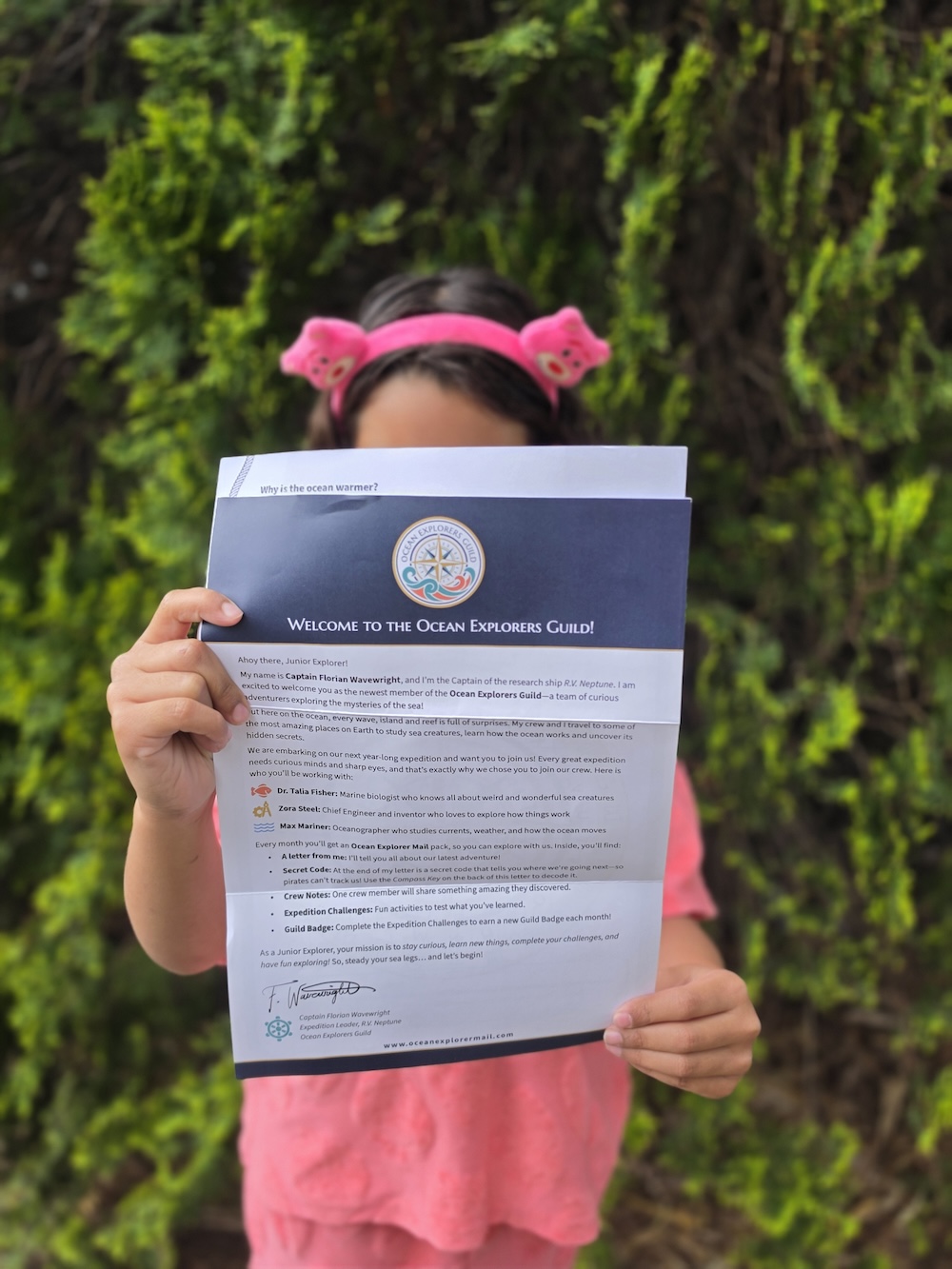
What if your child could explore the ocean without leaving the house? Picture a letter addressed to them arriving every month, full of stories, science, secret codes and hands-on challenges. That’s what Ocean Explorer Mail offers, and my eight-year-old has loved it.
We were kindly gifted the first two Expedition Packs from Ocean Explorer Mail, a monthly mail subscription for curious kids aged 5 to 9. I’m a mum of four and a former primary school teacher, so I’m always on the lookout for resources that mix storytelling, science and hands-on learning. This one does all three.
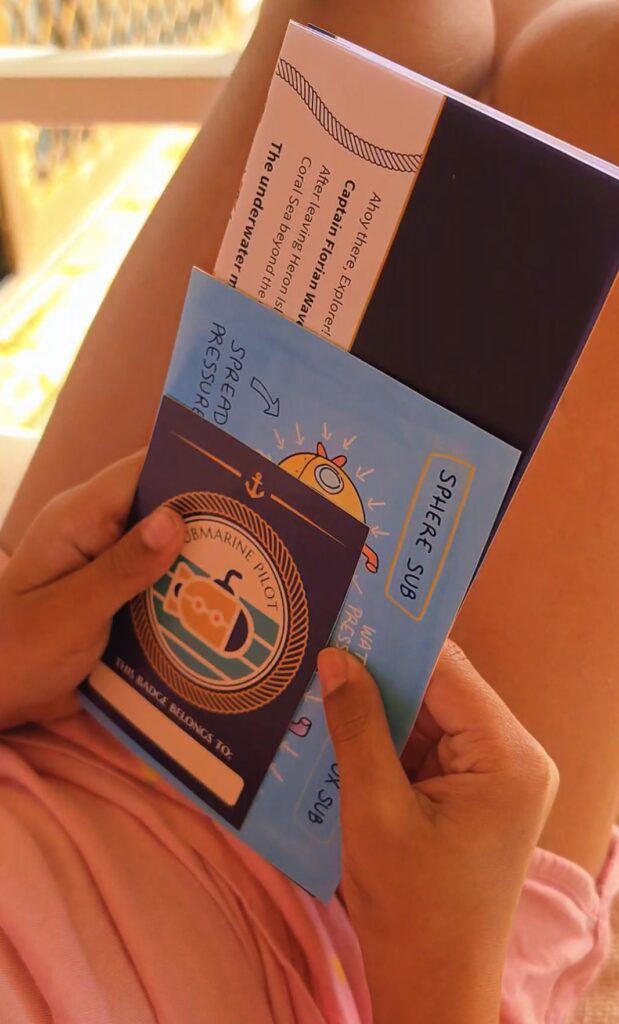
Welcome to the Ocean Explorers Guild
Each month, children join Captain Florian Wavewright and his crew aboard the R.V. Neptune for a year-long ocean expedition. Every pack introduces a new destination, new discoveries and new challenges, and each one picks up where the last left off. Kids aren’t getting a pile of unrelated worksheets. They follow one ongoing story and build on what they’ve already learned.
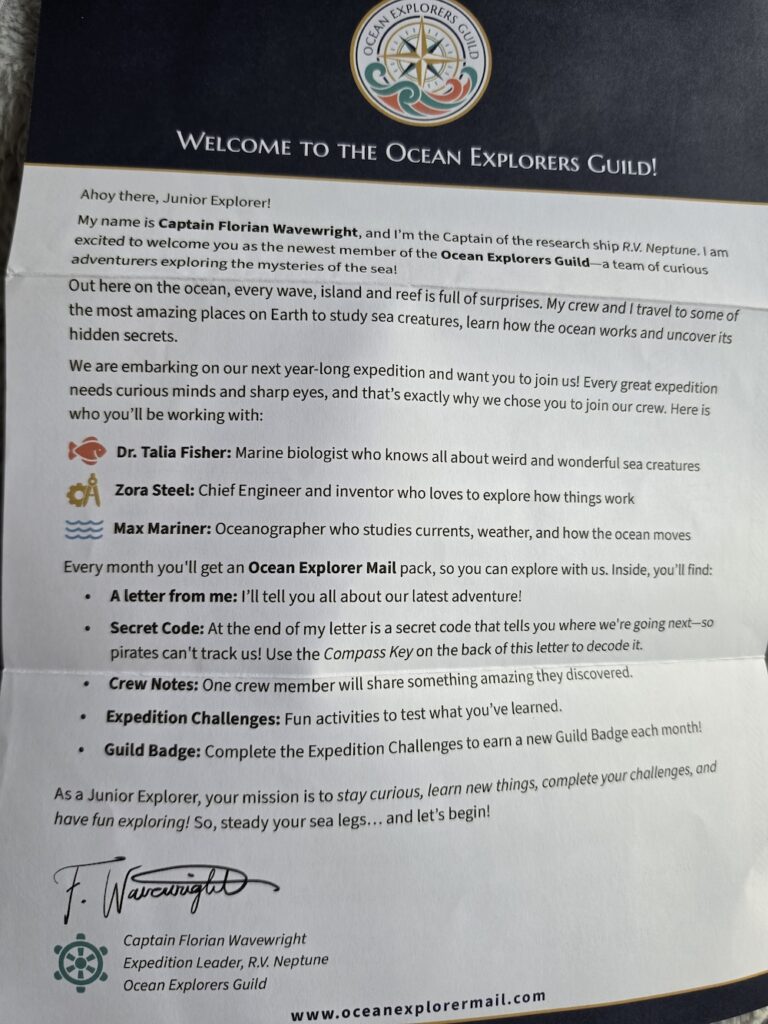
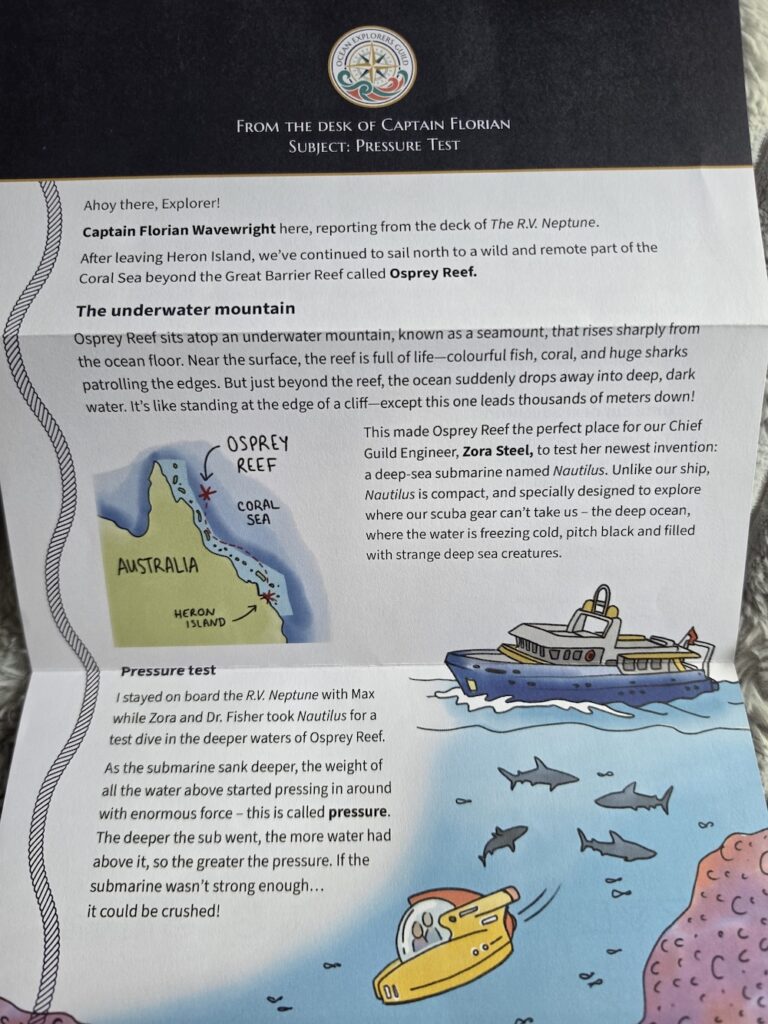
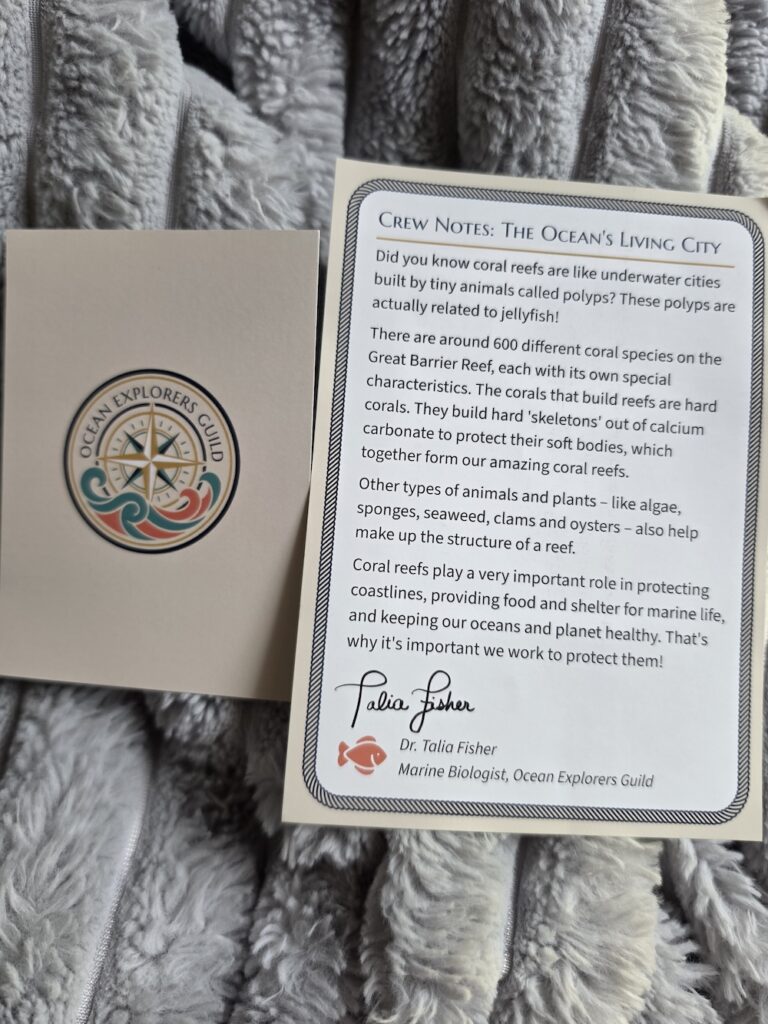
Every Expedition Pack includes an illustrated letter from the Captain, Crew Notes full of real ocean science facts, and Expedition Challenges that combine puzzles with hands-on activities. There’s also a secret code to crack using the Compass Key, plus a collectible Guild Badge to earn once the challenges are done.
The Joy of Getting Your Own Mail
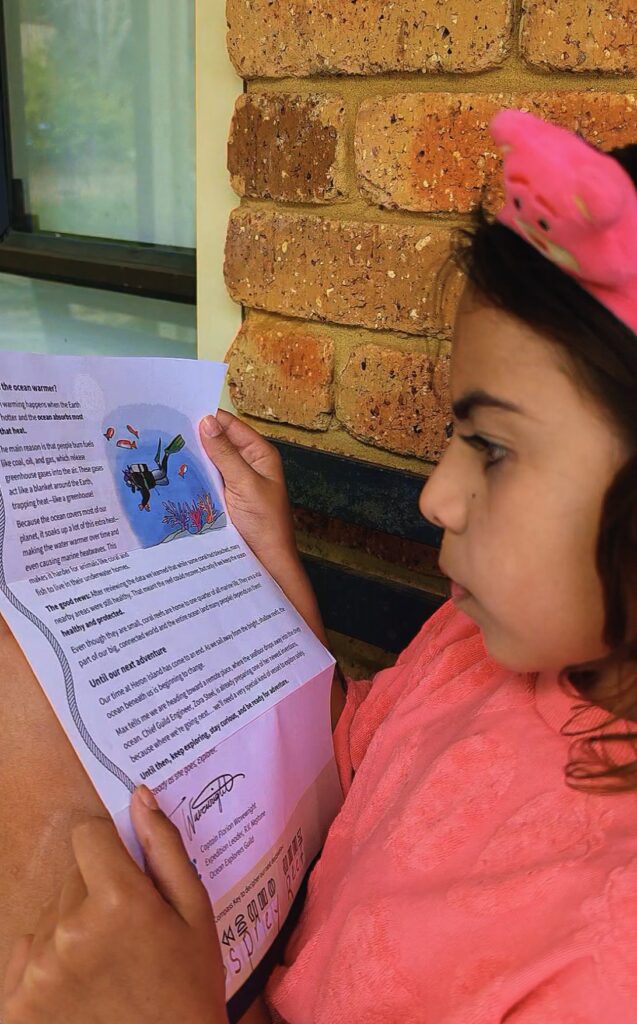
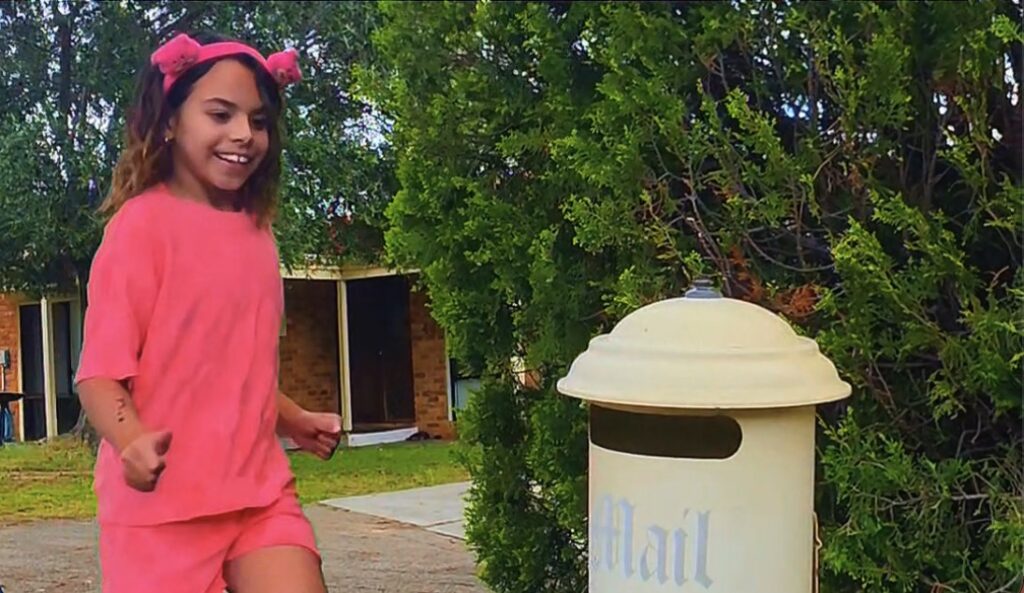
My favourite part was watching my daughter’s face when she saw an envelope with her own name on it. There’s something special about getting real mail, especially when it holds an adventure made just for you. So much of what kids do for entertainment happens on a screen, so I loved that this gave her something physical to sit down with, read and investigate. She’s a big reader, so the letters and storytelling suited her perfectly. Knowing another chapter would arrive next month kept the excitement going.
Expedition 1: Coral Explorer
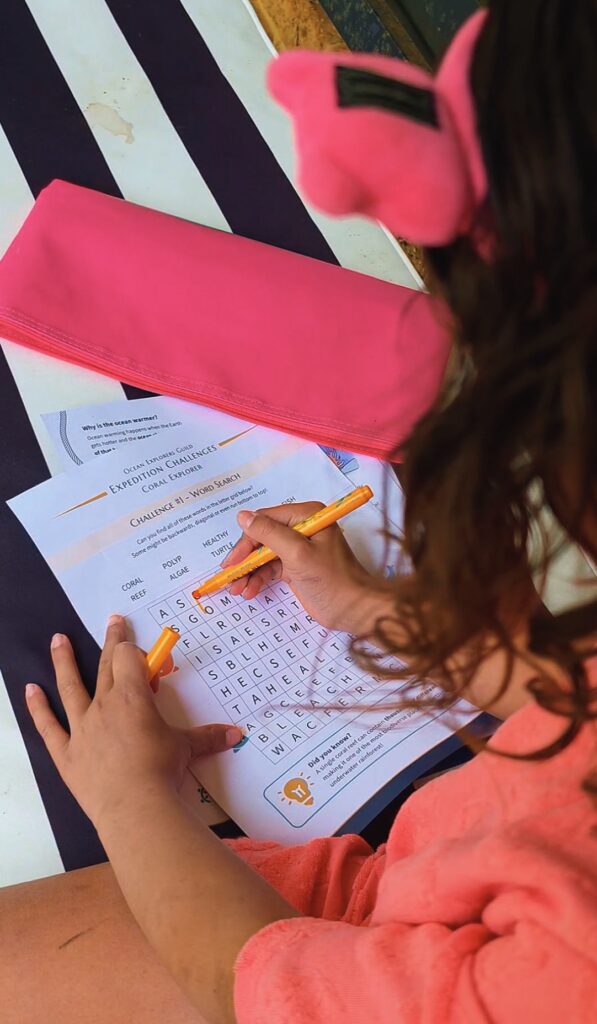
Our first adventure took us to Heron Island and the Great Barrier Reef. We learned how coral reefs form, how tiny polyps build them, and which marine life depends on them. We also covered ocean warming, coral bleaching and why healthy reefs matter so much.
The activities included a word search, a matching challenge pairing scientific terms with their meanings, and a creative coral collage. A secret message decoded with the Compass Key revealed the next destination. I liked that the activities reinforced the story. Children weren’t just reading about coral. They had to recall what they’d learned, use it and explore it in different ways. A Coral Explorer Guild Badge was the reward at the end.
Expedition 2: Submarine Pilot
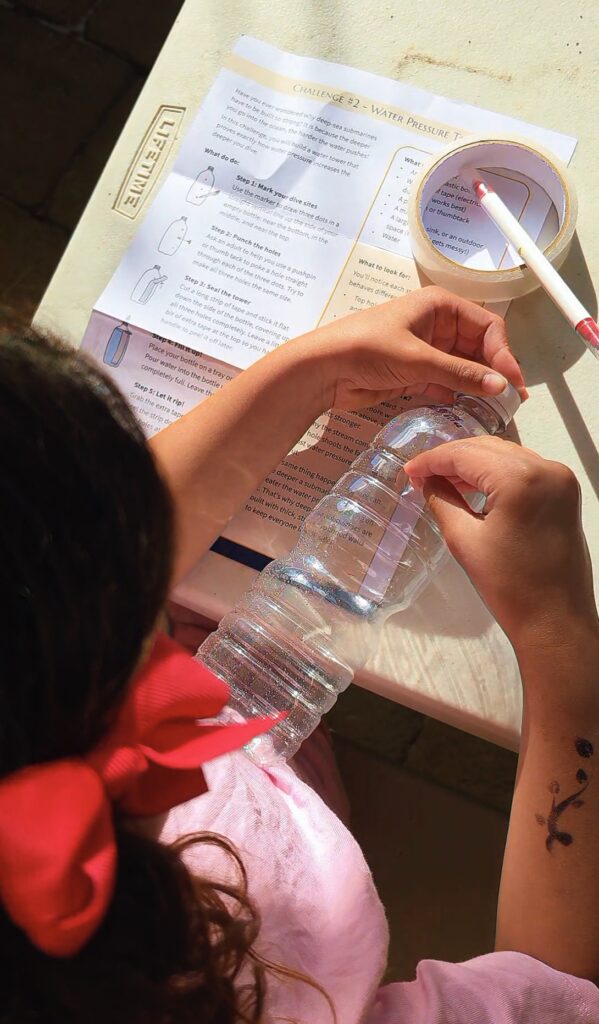
The second pack took us from Heron Island to Osprey Reef, a remote reef in the Coral Sea. The crew were getting ready to test Nautilus, a deep-sea submarine designed by Chief Engineer Zora Steel. The focus moved from marine biology to engineering and ocean physics. Kids learn how water pressure increases with depth, how buoyancy and ballast tanks make a submarine float or sink, and why submarines have strong, rounded hulls. They also get a feel for how hard the deep ocean is to explore.
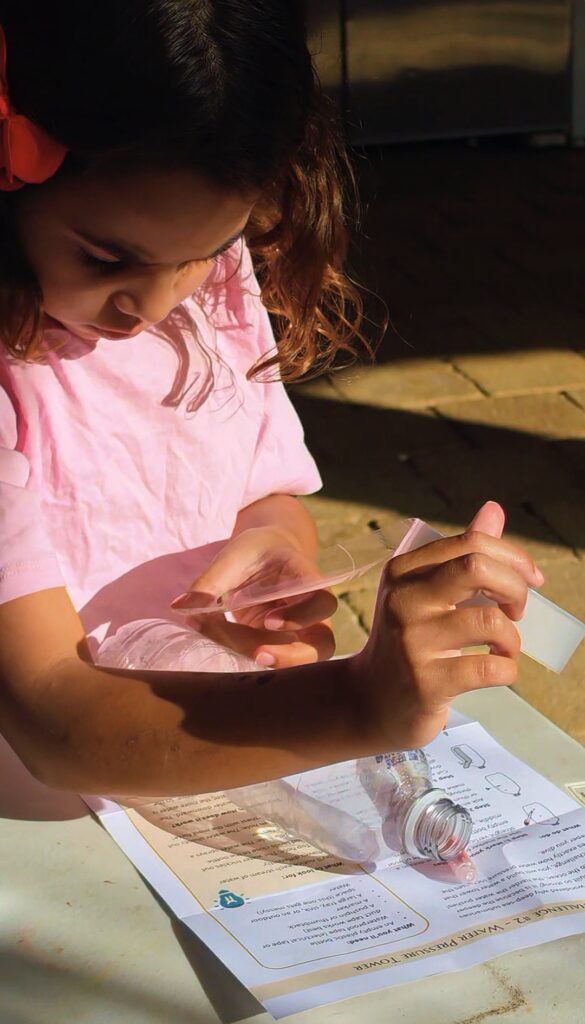
This pack included a science quiz, Crew Notes on submarine engineering and a water pressure experiment. The experiment uses an empty plastic bottle, water and a few household supplies to show how pressure changes at different depths. I liked the variety between the two packs. The first leaned on word puzzles and craft, while the second brought in a real science experiment. That suits different learning styles and keeps kids wondering what’s next. Of course, there was another secret code and a Submarine Pilot Guild Badge too.
Learning Something New Together
One moment really stuck with me. My daughter called out “Osprey Reef!” and I stopped and asked, “Is that a real place?” It is! Even as an adult, I learned something new. That’s one of the nice things about activities like these. They spark conversations and questions, and sometimes a bit of extra research, and parents get to discover things alongside their kids.
How Easy Is It for Parents?
Very easy. The instructions were clear, the information was pitched at the right level for kids, and there was almost no prep. My eight-year-old needed little to no help with the reading and paper-based challenges, and I loved seeing her confidence and independence grow as she worked through them. Some activities, like the water pressure experiment, need an adult nearby and a few household items. They’re simple things most families will already have.
Depending on your child’s age and reading confidence, the packs work as parent-led activities or independent tasks. Younger kids may enjoy having an adult read the letters aloud, while confident readers can tackle most of it on their own. I really appreciated that I didn’t have to spend ages preparing anything. The learning was already there and it slotted easily into our day.
A Great Fit for Homeschooling Families
As a former teacher, I can see this being a wonderful resource for homeschoolers. It covers a lot of ground. Reading comprehension, vocabulary and following written instructions support English and literacy. Marine biology, ecosystems, environmental change and physics cover science. The experiments and the engineering behind submarines bring in STEM. Cracking codes and solving puzzles builds critical thinking, and the art activities give kids a creative way to show what they’ve learned.
The ongoing expedition is also a great launching point for further learning. Families could add library books, documentaries, maps, extra experiments or a trip to a local marine environment. It could complement an existing program or inspire an ocean-themed unit. For families whose kids go to school, it’s a lovely way to keep learning at home without feeling like extra homework.
Who Will Love It?
I think kids will get the most out of it if they love adventure stories, oceans and sea creatures, science experiments, puzzles and secret codes, or collecting badges. It also suits children who benefit from screen-free, hands-on learning. My daughter ticks almost all of those boxes. It would also make a thoughtful gift for the child who already has plenty of toys. Instead of one present to open, they get a new adventure to look forward to each month.
Subscriptions and Shipping
You can choose a monthly, 6-month or 12-month subscription, and there’s also a gift option. The monthly plan is a flexible way to test the waters, while the longer plans work out cheaper. At the time of writing, prices on the website were listed in USD, so check the site for current pricing in Australian dollars. Shipping within Australia is free, and you can cancel anytime.
Our Final Thoughts
What I enjoyed most was how Ocean Explorer Mail brings together so much learning without feeling like schoolwork. The story gives the activities a purpose, and the science is real and easy to understand. The challenges are varied, simple to follow and encourage reading, curiosity, independence and problem-solving. I appreciated the low prep and being able to join in when my daughter wanted me to. She loved getting her own mail, following the expedition and completing each mission. I was also glad the second pack didn’t simply repeat the first, as it continued the story with completely different science and activities.
If you’re after an educational gift, a screen-free activity or something to complement homeschooling or school learning, Ocean Explorer Mail is well worth a look. You might even learn something new yourself!
Ocean Explorer Mail
Online subscription delivered by mail (free shipping Australia-wide)
Website: www.oceanexplorermail.com
- About the Author
- Latest Posts