

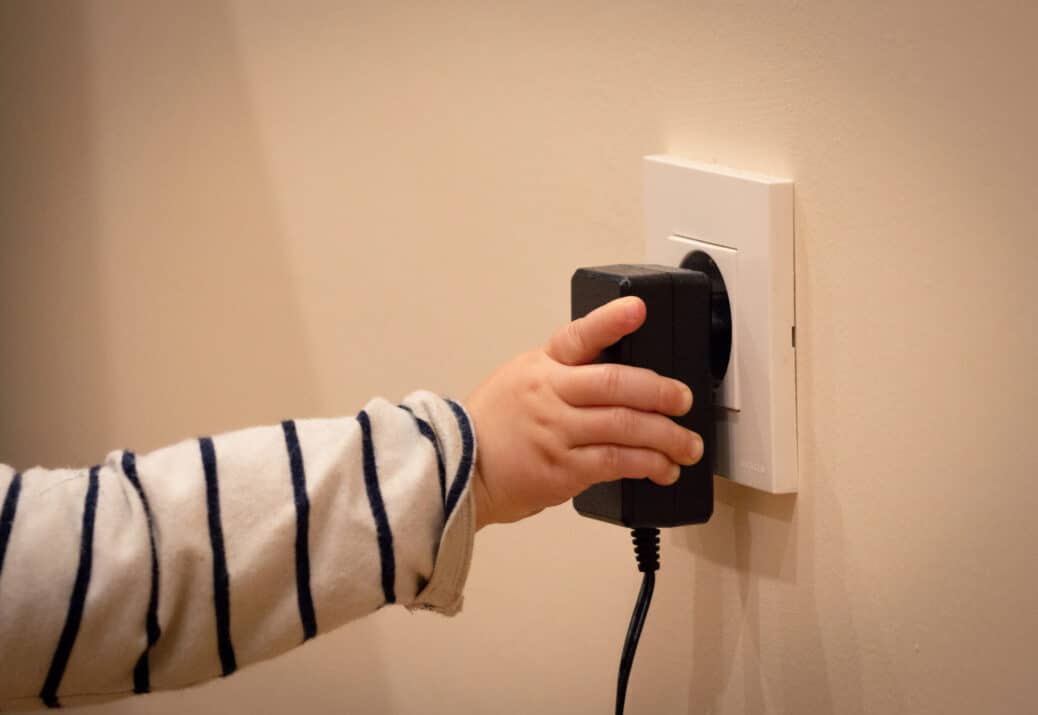
Is your home prepared for a child’s curiosity?
Those little plastic slots on your walls are exactly at eye level for a crawling human, and to them, they look like the perfect place to conduct a science experiment with a paperclip.
Protecting your curious explorers starts with a solid strategy for your electrical system. You cannot watch a child every single second, so your home needs to act as a silent guardian while you are busy.
Passive safety measures are the best way to handle the gap between your supervision and a child’s natural speed. Instead of constantly saying “no” or pulling a baby away from a wall, installing the right hardware creates an environment where accidents are prevented.
This approach lowers the daily stress for everyone in the house. By upgrading your home’s infrastructure, you move from reactive parenting to proactive protection.
Risks of Exposed Electrical Outlets
Children are naturally tactile learners, and the design of a socket provides a tempting target for small fingers. Electrical burns and shocks can happen instantly, so passive protection is your best defence.
Common risks include:
- Direct contact with outlet openings
- Inserting objects such as toys or metal items
- Partially unplugged cords exposing live prongs
- Sparks or localised fires from improper contact
- Increased risk in low-level outlets
Standard outlets are designed for adult use, but that same accessibility creates hazards for children who are beginning to crawl or explore. Childproofing should cover both unused outlets and those actively powering appliances.
Use Built-In Outlet Safety Covers
Standard plastic caps were the gold standard for years, but they have a few major flaws. They are small enough to be choking hazards if a child manages to pry them out with their fingernails or a sturdy toy.
Let’s be honest, they are also a pain for adults to remove when you need to vacuum. If you find them difficult to take out, you might end up leaving the outlet exposed just to avoid the hassle, which defeats the purpose. Modern solutions have moved toward more permanent, integrated hardware that stays attached to the wall.
Install Tamper-Resistant Outlets
For long-term protection without adjustments, Tamper-Resistant Receptacles (TRRs) are the industry standard.
These outlets include built-in safety features such as:
✔ Internal shutters that stay closed until equal pressure is applied
✔ No opening when a single object is inserted
✔ Protection against objects like keys, pins, or toys
✔ Code-compliant design used in modern homes
Replacing your old outlets with TRRs is a permanent upgrade. They maintain your home’s aesthetic while adding a barrier that is difficult for a toddler to bypass.
Use Sliding Outlet Covers and Box Shields
For outlets that stay in use, like the one behind the TV or next to the crib, sliding covers offer a practical solution. The options below show how each type protects active outlets:
| Sliding Outlet Covers | Box Shields |
| Replace existing faceplates | Cover the entire outlet and plug |
| Spring-loaded doors close automatically | Fully enclose plugs and excess cords |
| Close when a cord is removed | Prevent cords from being pulled out |
| Block access to open sockets | Limit access to active plugs |
| Suitable for frequently used outlets | Handles bulky adapters and strips |
These solutions work well in areas like home offices or entertainment setups where multiple cords are grouped together, reducing access to exposed plugs and cables.
Secure Power Strips
Power strips are commonly ignored due to their floor placement, which makes them more accessible than wall outlets. A child can easily switch a power strip off and on, or try to insert objects into unused ports.
Apply these safety measures:
✔ Use power strip covers to enclose the entire unit
✔ Leave only the main cord exposed
✔ Mount power strips under desks or behind furniture
✔ Keep power strips out of reach
These steps reduce access to live ports and prevent tampering. Keeping them secured supports safer use of connected devices.
Additional Safety Checks Beyond Childproofing
DIY outlet covers help reduce direct contact, but the condition of your home’s wiring also needs attention. According to Static Electrics, regular maintenance checks can identify hidden risks like loose connections or outdated wiring that a simple plastic cap cannot fix. Having a professional inspection adds an extra layer of protection across your electrical system, such as:
✔ Detects hidden electrical faults before they escalate
✔ Identifies outdated wiring that needs upgrading
✔ Reduces risk of electrical fires and shock hazards
✔ Confirms your system meets current safety standards
✔ Verifies proper operation of GFCIs and safety devices
✔ Provides clear assessment of your home’s electrical condition
GFCIs are those outlets with the “Test” and “Reset” buttons, usually found in kitchens and bathrooms. They are designed to shut off power instantly if they detect water or a surge. Testing these monthly is a simple habit that prevents major accidents in high-risk areas of your home.
Raise Awareness Around Electrical Safety
As children grow, physical safety measures are not enough, and they need to understand how to respect electricity. Use simple language to explain that “the wall is for grown-up tools only” and that “electricity is hot.” By combining modern hardware with professional inspections, you create a space where your child can roam and learn without unnecessary danger. Taking these steps today lets you focus on watching them grow without worrying about hidden risks.
- About the Author
- Latest Posts