

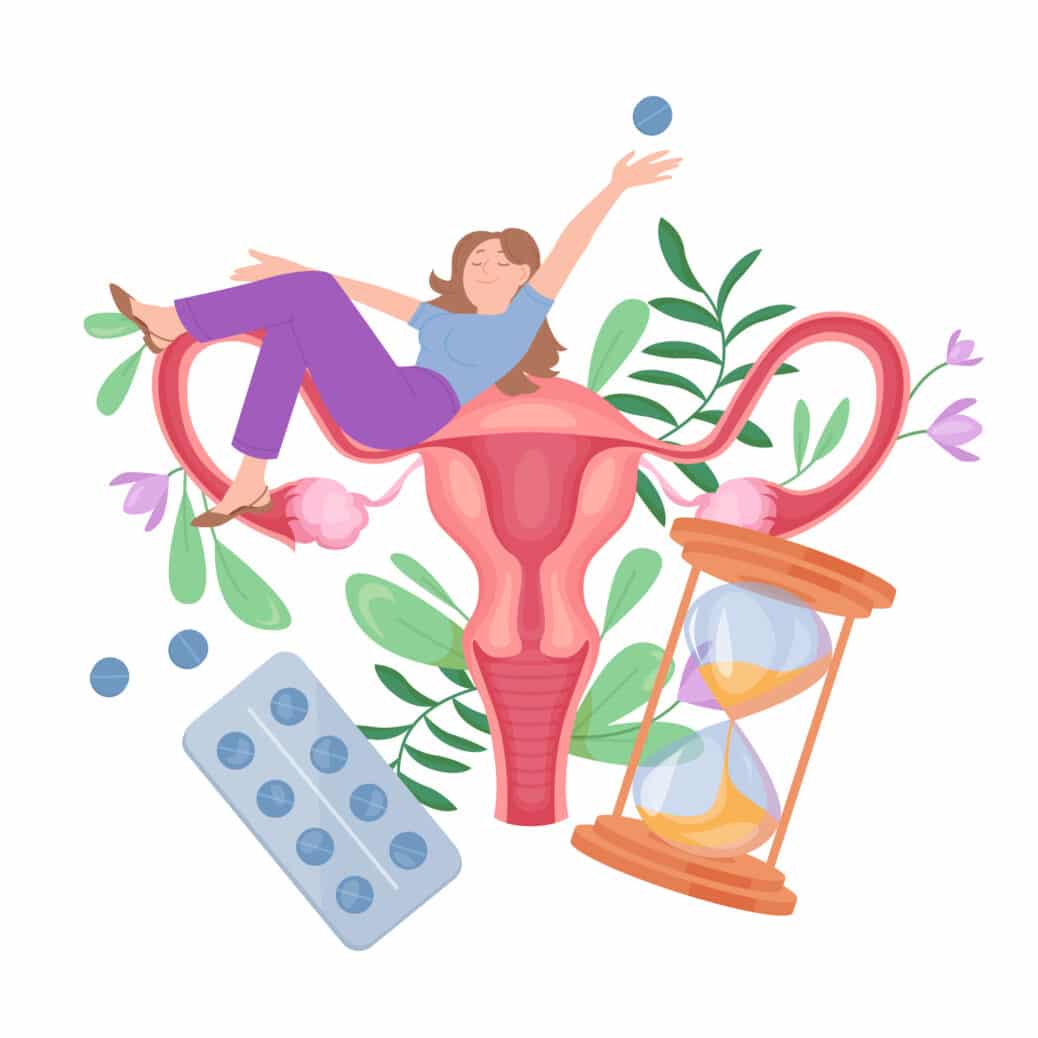
Most people are aware of the basics of conceiving naturally, including that a woman (or people with menstrual cycles) can only become pregnant around the time of ovulation. However, many couples don’t know about the fertile window and which days are the most fertile. An ovulation calculator is a simple tool that helps to identify your most fertile days, which in turn, increases your chances of conceiving naturally.
How an Ovulation Calculator Can Help You Conceive Naturally
One of the most confusing and frustrating parts of trying to track your ovulation is that most ovulation calendars are based on the “standard” 28-day menstrual cycle. In reality, relatively few women have a typical 28-day cycle – your cycle can be as short as 21 days or as long as 35 days. This is why you should use an ovulation calculator that allows you to input the length of your cycle so that you can find out your fertile days. It can also help you estimate fertile days in future cycles and let you know your estimated due date (EDD) if you are able to conceive during that cycle.
Using an ovulation calculator will help you get a better understanding of your body’s patterns and the changes your body goes through during your cycle. This kind of awareness can help to lower your stress levels, which in turn increases your chances of conceiving naturally. Research on the effects of stress on fertility has found that stress significantly reduces the probability of conception during the fertile window.
The Importance of Accuracy in Calculating Ovulation
When you’re trying to conceive naturally, timing is crucial. This is because the fertile window is only about 6 days every cycle. The reason that the fertile window is 6 days long is because sperm can survive in the reproductive tract for up to 5 days, but the egg is only viable for a maximum of 24 hours after release. To make things more complicated, not all sperm last for 5 days, which means that you may not have 6 fertile days, and instead, you may have just 4 days or fewer. Calculating your estimated ovulation day helps answer the crucial question – when are you most fertile? To increase the probability of conceiving naturally, you should have sex 1-2 days before ovulation and on the day of ovulation itself. Since the fertile window is so small, if you do not calculate ovulation correctly, you significantly reduce your chances of conceiving.
While an ovulation calculator will help you determine which days you ovulate, it is still important to know the basics, such as when do you ovulate, how long does ovulation last, and how to track ovulation. When you ovulate will depend on the length of your cycle. You’ve probably come across many references to women ovulating on day 14 of their cycle, but this is only true for women who have a 28-day cycle. You will ovulate earlier or later depending on the length of your cycle – for instance, if you have a 22-day cycle, you are likely to ovulate on day 8, but if you have a 34-day cycle, you are likely to ovulate on day 20. Most women ovulate approximately 14 days before the start of their next period. Ovulation lasts only 12 to 24 hours, so if sperm is already present when ovulation occurs, the chances of conceiving naturally are higher since they are in the right place at the right time to fertilise the egg.
Lifestyle Factors That Can Influence Ovulation
Your overall health and lifestyle can play an important role in ovulation and fertility. This includes maintaining a balanced diet, stay physically active, and get sufficient sleep. High levels of stress, significant weight changes, smoking, and excessive alcohol intake may disrupt ovulation or affect cycle regularity. While no single lifestyle change guarantees conception, creating a supportive environment for your body may improve your chances of becoming pregnant. If you are trying to conceive, supplements such as folic acid can help support healthy development in early pregnancy. However, it is best to avoid self-prescribing, as high doses may be harmful. Instead, consult your GP to find out which supplements are most suitable for you.
The human body doesn’t follow a fixed schedule, so ovulation can shift, not just from person to person but also from cycle to cycle. While an ovulation calculator can help estimate when you are likely to ovulate, it should not be seen as completely precise. Your body may not follow the same pattern every month, and that’s completely normal. There are various methods to identify fertile days, such as evaluating cervical fluid, tracking basal body temperature, and using an ovulation predictor kit. Combining one or more of these methods with your ovulation calculator will allow you to more accurately identify your most fertile days to increase the chances of you conceiving naturally.
- About the Author
- Latest Posts