

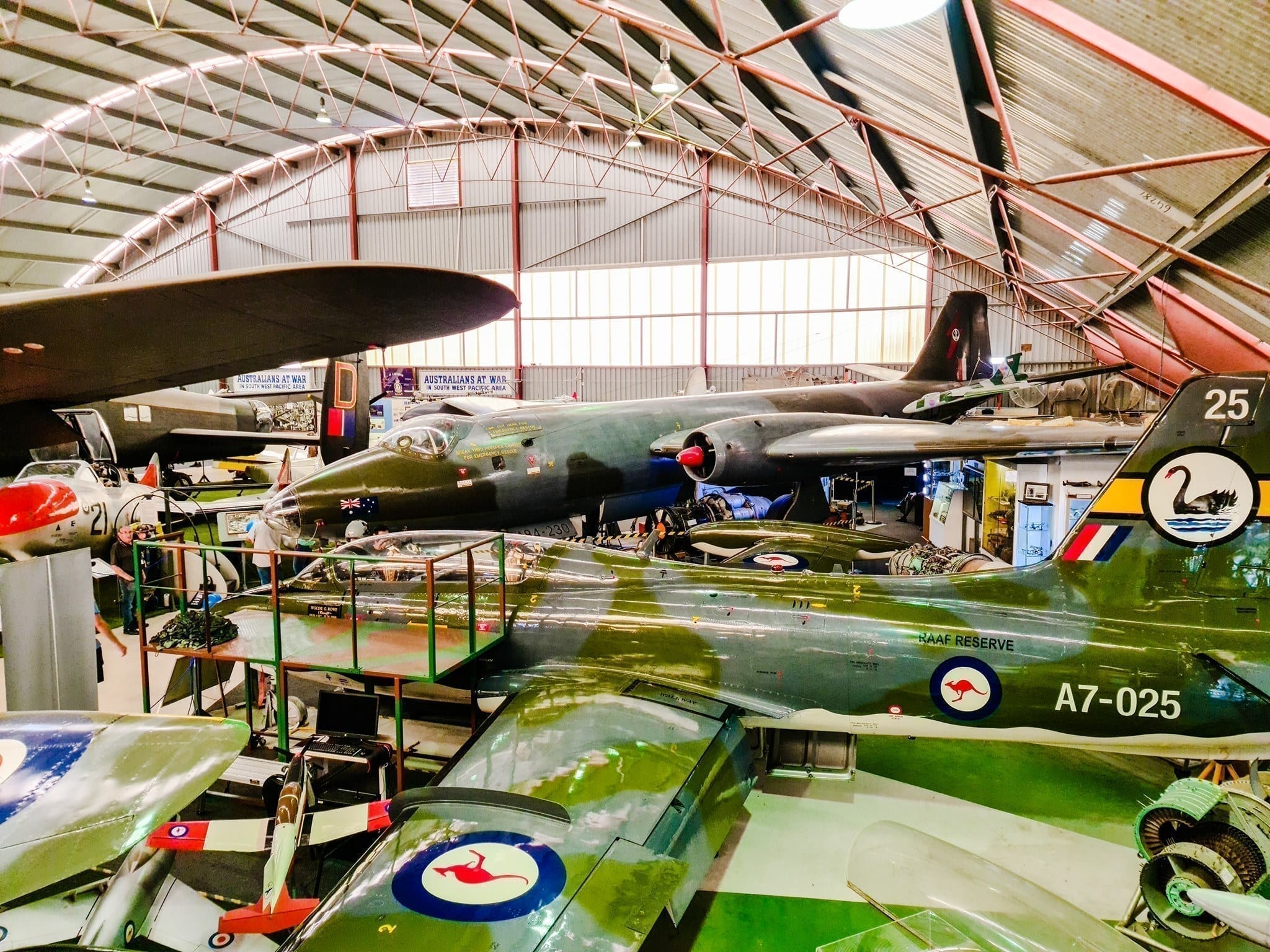
ucked inside the Air Force Memorial Estate in Bull Creek, the Aviation Heritage Museum is a brilliant day out for families with kids of all ages, especially those who are fascinated by planes, helicopters and all things that fly. The museum is home to more than 30 civilian and military aircraft and thousands of aviation artefacts, many with direct links to the Royal Australian Air Force. From the moment you arrive, it feels like you’re stepping into a giant hangar‑sized toy box for aviation lovers.
One of the loveliest things about the Aviation Heritage Museum is that it’s predominantly run by volunteers, many of whom are ex‑pilots or lifelong aviation enthusiasts. They’re generous with their time and knowledge, and are more than happy to answer questions, share stories and help kids understand how different aircraft worked and what they were used for. It gives the whole experience a really personal, storytelling feel, rather than just walking around looking at static displays.
The museum is split across two large hangars – the South Wing and the North Wing. You’ll enter through the South Wing, which houses many of the smaller aircraft along with some very impressive standouts. The massive PBY‑5A Catalina flying boat, with its enormous 31.7‑metre wingspan, dominates the space and is an instant “wow” moment for kids and adults alike.
For many families, the biggest highlight here is “Huey”, a Bell UH‑1H Iroquois helicopter. Children are allowed to climb into the pilot’s seat and pretend to be on a rescue mission or flying into the jungle – a simple but memorable hands‑on experience.


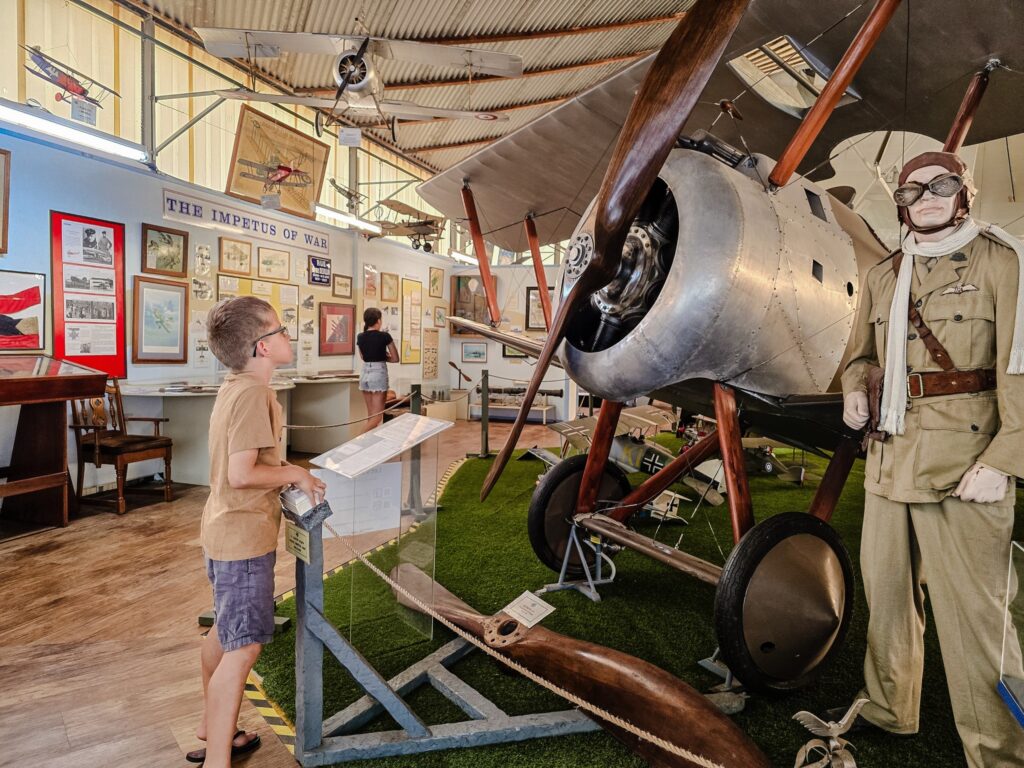
The South Hangar is also where you’ll find a replica Sopwith Camel. Kids can press a button to make the propeller spin, which always gets a smile.
Another nostalgic touch is the old air traffic control desk, where little visitors can pretend to direct planes and talk into imaginary headsets.

A favourite interactive exhibit for many families is “Sugar Bird Lady”. This display lets children control lights on the wings and tail and move the aircraft’s flaps to change its “direction”. It’s a fun, tactile way to introduce how planes are controlled, and younger kids in particular love being given permission to push buttons and “fly” a plane.
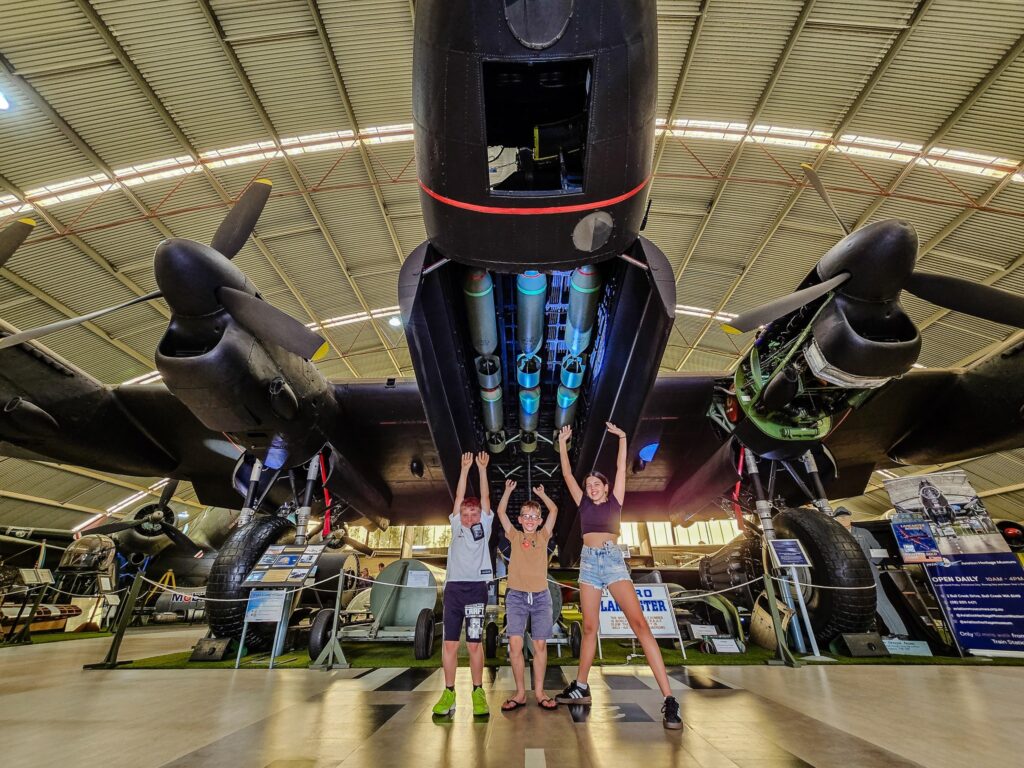
From there, you can continue through to the North Wing, where the aircraft suddenly get even bigger and more dramatic. As you walk in, you’re greeted by the enormous Avro Lancaster heavy bomber – one of only two left in Australia.

Standing beneath its vast wings and bomb bay is a real goosebumps moment and a great opportunity to talk with older kids about history and wartime stories. Many children enjoy standing under the aircraft pretending a bomb is about to drop, which sounds cheeky but actually opens the door to some valuable conversations about what these planes were really used for.
Another key attraction in the North Hangar is the Dakota C47, a military transport aircraft that carried troops, cargo and wounded soldiers. Peering into the cockpit, you’ll spot an incredible number of switches and dials – and, to the kids’ surprise, ashtrays. It’s a fun, slightly shocking conversation starter about how people used to be allowed to smoke on planes “back in the olden days”.


The hangar also includes a walkway and viewing platform so visitors can enjoy a higher vantage point over some of the larger aircraft, which helps children appreciate the sheer scale of the collection.
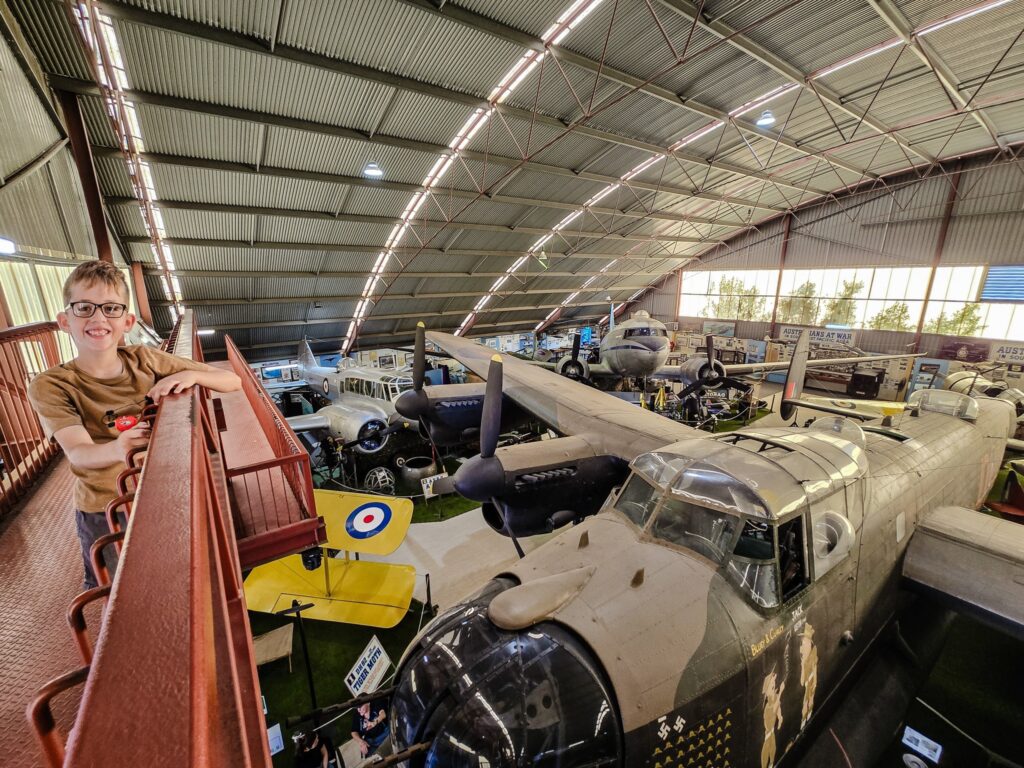
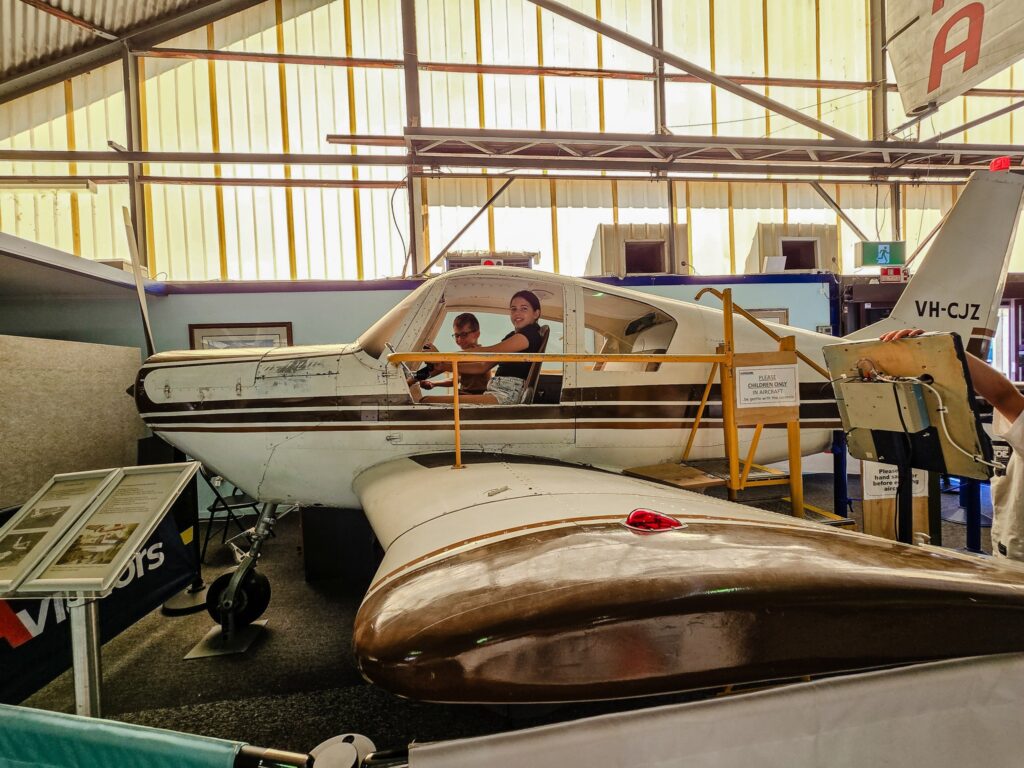
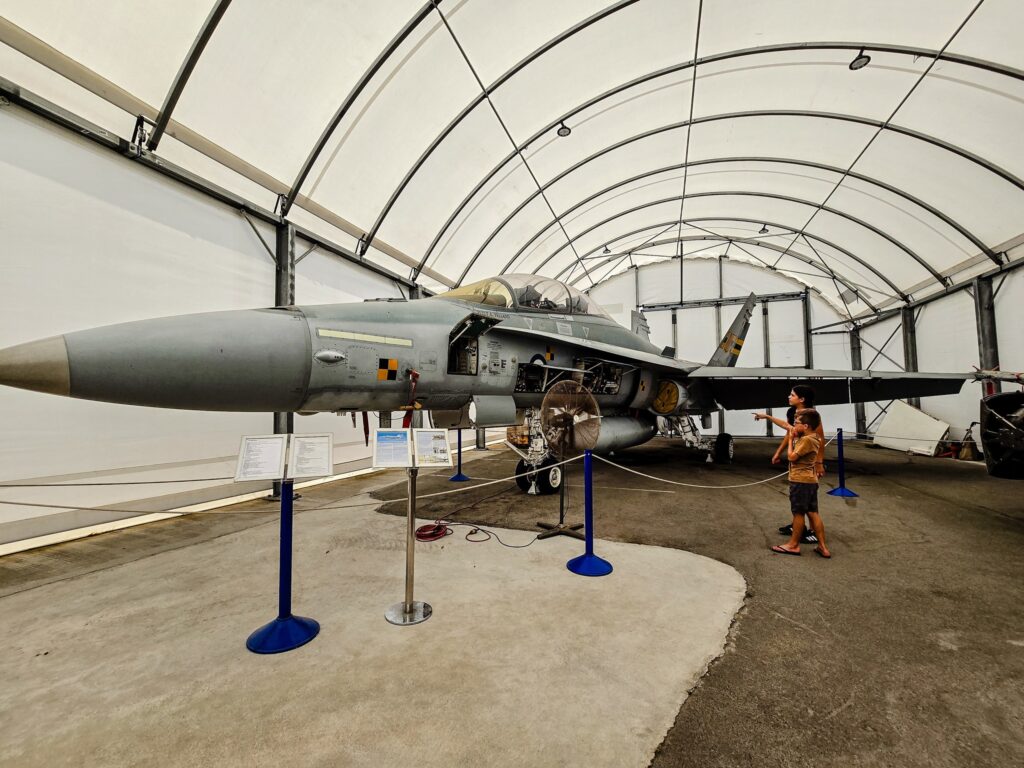
While you generally can’t climb inside most of the aircraft, the museum is cleverly arranged so you can get very close to them. Many planes have steps or platforms up to the cockpit windows or open doors, allowing kids to peek inside and imagine what it would be like to sit at the controls or travel in them. Combined with the hands‑on exhibits and the enthusiasm of the volunteers, there’s plenty to keep curious children engaged, even if they’re not hardcore plane fans.

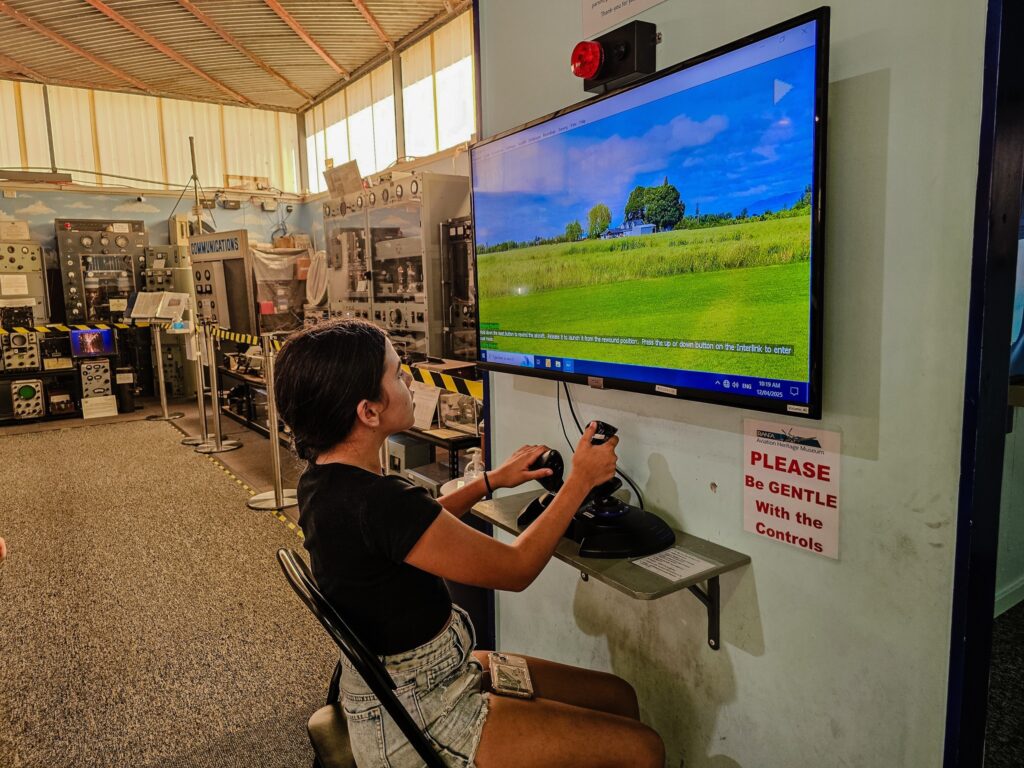
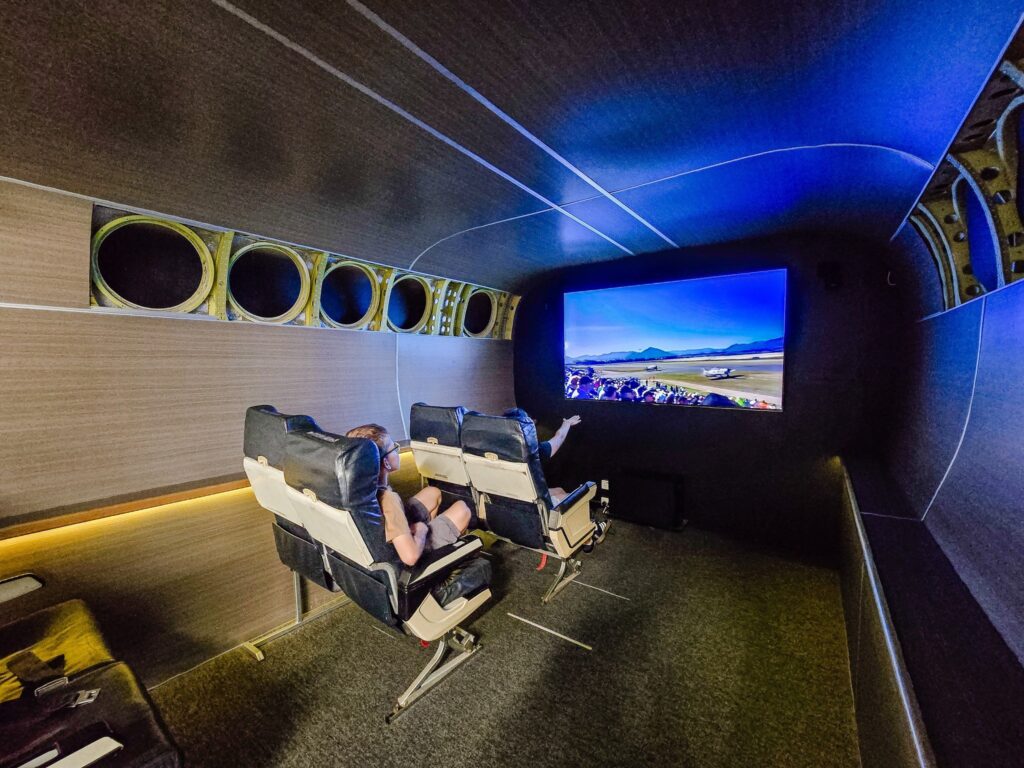
In recent years, the museum has continued to evolve and modernise, adding experiences such as virtual reality flying in a Macchi cockpit and a dedicated Young Aviators area. These newer elements add an extra layer of interactivity and excitement, particularly for school‑age children and teens who enjoy tech‑based activities and simulations. Combined with seasonal events and special experiences advertised on the museum’s website, it’s worth checking online before you go to see what’s on.
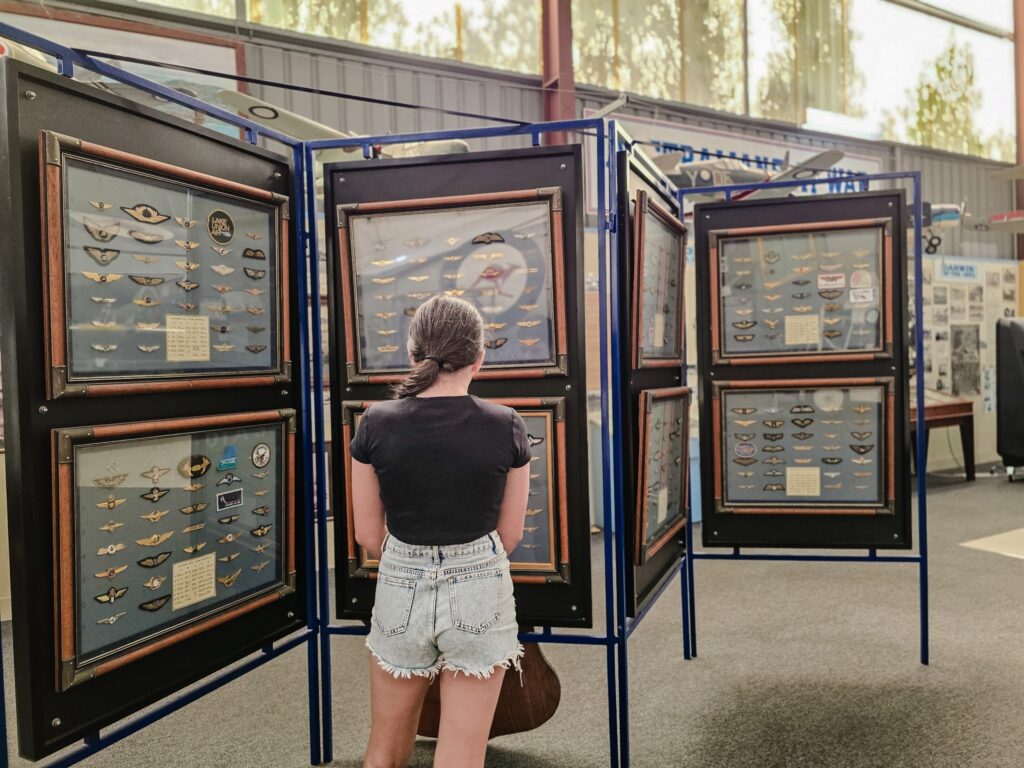
Beyond the hangars, the Aviation Heritage Museum also has book and photo collections that will appeal to older children and adults who want to explore aviation history in more depth. There’s a small on‑site gift shop that’s especially popular with kids – it’s stocked with what’s described as the largest selection of aeroplane models in Perth, as well as other aviation‑themed souvenirs. You can also pick up cold drinks and ice creams here, which is handy if you’re visiting on a warm day or need a quick break mid‑visit.
Allow at least an hour or two for your visit, though aviation‑mad kids could easily stay longer exploring every nook and cranny, asking questions and revisiting their favourite aircraft. There’s a lot to take in, and it’s the kind of place where you’ll notice new details each time you go. Many families find themselves returning, especially when kids get a little older and are ready to appreciate more of the history and engineering behind the displays.
Overall, the Aviation Heritage Museum in Bull Creek is a fantastic, educational and surprisingly hands‑on outing for Perth families. Whether you’re entertaining school‑aged kids in the holidays, sparking a younger child’s love of flying, or indulging a grandparent’s nostalgia for aircraft they remember from decades ago, this museum offers something for everyone under one very impressive roof.
Aviation Heritage Museum
Address: Air Force Memorial Estate, 2 Bull Creek Drive, Bull Creek, WA
Opening hours: Open every day, 10:00am – 4:00pm (closed Good Friday, Christmas Day, Boxing Day and New Year’s Day – check website for any updates)
Website: https://aviationmuseumwa.org.au
Find more places to visit in Perth
Find more places to spot planes in Perth
- About the Author
- Latest Posts

Kellie Elliott is an adventurous mum of four who’s turning Perth into her playground! When she’s not busy wrangling her little ones, you can find her on Instagram at Perth Mum Adventures, where she shares all her exciting adventures. From exploring new playgrounds to discovering off-the-beaten-path treasures, Kellie’s knack for turning everyday outings into thrilling adventures will leave you inspired and ready to explore the best that Perth has to offer!