

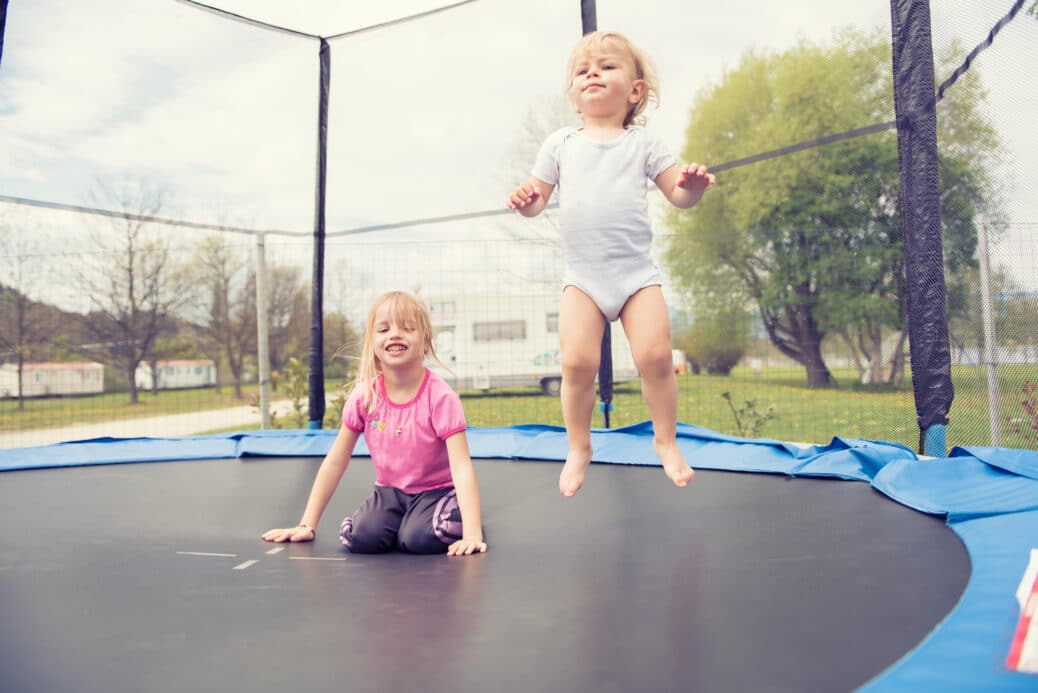
Ask a group of Perth parents about backyard play and trampolines come up fast. They take up room and get hammered daily, yet they often outlast everything else in the yard. The first question usually isn’t about brands or sizes, though. It’s about timing. At what age does a trampoline stop being a worry and start being a good buy?
No single birthday flips the switch. Most paediatric guidance lands on age six as a sensible floor for solo bouncing, largely because younger children haven’t built the coordination or the bone strength to handle clumsy landings. Under six, the picture changes if you’re talking about a small, low trampoline made for toddlers and used with an adult standing right there. Many families start exactly that way.
Why age six keeps coming up
The number isn’t arbitrary. Younger kids fall more often and land flatter, and they weigh little enough that a second jumper can send them flying. Most trampoline injuries happen with more than one child bouncing at once, and the smallest child almost always comes off worst. That’s the real reason supervision matters more than age on its own. A confident five-year-old bouncing alone under a watchful eye is often safer than three eight-year-olds left to it.
If you’ve begun comparing trampolines built for backyard family use, you’ll notice the better ones design around this exact problem, with safety nets that keep kids away from the edge and padding that covers the spring zone where most knocks happen.
What younger children can use
For toddlers and preschoolers, a mini trampoline with a handle bar is a reasonable place to begin. It sits low to the ground, it has a small jumping surface that limits how high anyone gets, and the bar gives little hands something to hold. Used indoors on rainy Perth afternoons, it burns off energy without anyone leaving the lounge room.
The jump to a full-size backyard trampoline should wait until your child can follow a few simple rules and stay on it without wobbling off balance. Coordination at five or six is worlds apart from coordination at three.
Matching the trampoline to your yard
Size is where a lot of buyers get caught out. A big round trampoline looks generous in the showroom and enormous once it’s wedged between the clothesline and the fence. Measure the space first, then leave clearance on every side so a kid bouncing toward the edge has room and so you can mow around it.
Round shapes pull jumpers back toward the centre, which suits younger children. Rectangular models give a more even bounce across the whole mat and tend to appeal to older kids practising tricks. Shape affects price too, so it pays to know which one your family will get the most out of before you start reading reviews.
The parts that wear out
Sun is brutal on outdoor play equipment, and Australian sun more than most. The components that fade and fray first are the soft ones. The safety net goes first, usually, followed by the spring padding and any UV-exposed stitching on the mat. Galvanised springs and a rust-resistant frame will keep going for years, but expect to replace a net once or twice over the life of the trampoline.
Worth checking before you buy is whether replacement parts are sold separately. A frame that lasts a decade is little help if you can’t get a new net for it after summer three. Brands that stock spares tend to be the ones still standing in backyards long after the cheaper imports have been dragged to the verge.
How long one should last
A well-made backyard trampoline can run eight to ten years of regular use, as long as it stays anchored and padded, and never sits in pooling water after rain. Cheaper models often start sagging or rusting inside two or three. The gap in price between the two usually narrows once you factor in replacing the whole thing twice.
Anchoring deserves a mention on its own. Perth gets enough windy days that an unsecured trampoline can lift and tumble across a yard, taking the fence with it. Ground anchor kits are cheap and quick to fit, and they save a lot of grief in a storm.
Bringing it back to your child
Age six is a guide, not a gate. Some kids are ready a little earlier with the right equipment and close supervision; others do better waiting another year. What stays constant is that the trampoline itself shapes the experience as much as the birthday on the box. Its size and build matter, and so does the upkeep. Get those right and a trampoline earns its space in the yard for years, through every season a Perth backyard throws at it.
- About the Author
- Latest Posts