Hot Water Safety: The Valve Most Parents Never Check
You already test the bath with your elbow. Most of us do it without thinking, somewhere between getting the towel out and talking someone into the water.
Here’s the part that doesn’t come up at the child health nurse: the temperature your tap can reach is a plumbing setting, not a parenting one. And in a lot of Perth homes, particularly older ones, it’s set higher than it should be.
Kidsafe’s figures make the case better than we can. Water at 60 degrees can scald a child in about one second. At 50 degrees, the same injury takes more than five minutes. That’s the difference between a burn and enough time to lift a child out.
Here’s what we’ll go through:
- Why 50 degrees is the number that matters, and how to tell what yours is set to
- Why turning the thermostat down is the wrong fix, and can be a dangerous one
- What’s worth checking before a new baby arrives
- What to do in the first twenty minutes if it does happen
The Difference Between 50 And 60 Degrees
Australian plumbing rules cap the water delivered to your bath, shower and bathroom basin at 50 degrees in a home. In childcare centres, schools and aged care it’s lower again, at 45.
Those rules apply to new and upgraded installations. If your house hasn’t had plumbing work done in a while, nobody has necessarily been back to check, and there’s no alarm that goes off when it drifts.
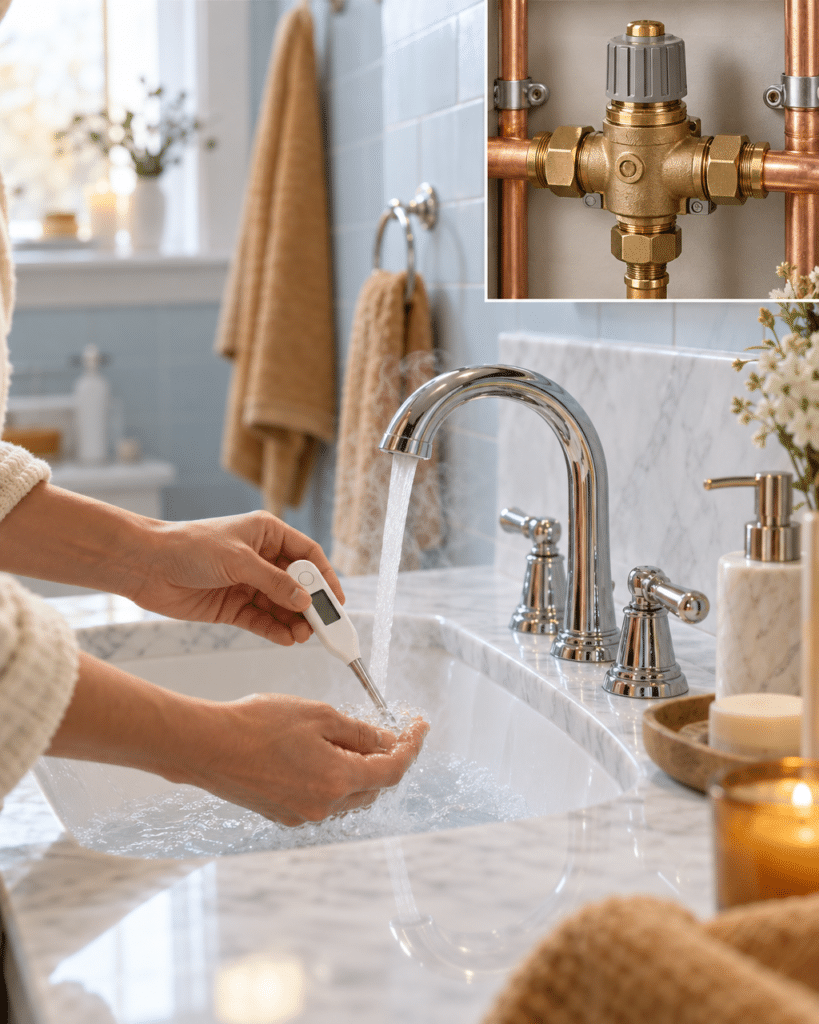
The simple test: run the hot tap in the bathroom for a couple of minutes and put a kitchen thermometer under it. If you’re seeing numbers in the high 50s or beyond, that’s worth a conversation with someone licensed, because the fix is not a dial you can reach.
If it’s running hot, or it swings between scalding and lukewarm for no obvious reason, it’s worth getting a licensed plumber like All Needs Plumbing to take a look rather than living with it. A valve that has failed usually fails quietly.
Why You Can’t Just Turn The Thermostat Down
This is the bit that surprises people, and it’s the reason the DIY answer is the wrong one.
Your hot water tank has to stay at 60 degrees or above. Not for comfort, but because Legionella bacteria multiply in warm water and stop multiplying in hot. Turn the storage temperature down to something that feels safe at the tap and you’ve swapped a burns risk for a bacterial one.
So the tank stays hot and the tap runs cooler, and the thing that reconciles those two is a small device called a tempering valve. It blends hot water from the tank with cold on the way to your bathroom, landing at about 50 degrees.
Newer homes have one. Older ones often don’t, and the ones that do have a part that wears out like anything else. When a tempering valve fails, the usual symptom is water that’s suddenly much hotter than it used to be, or a shower that won’t hold a steady temperature.
It’s a licensed job, not a weekend one, and it isn’t expensive relative to what it prevents.
What’s Worth Checking Before A New Baby Arrives
If you’re nesting and looking for something more useful than folding muslins, this is a decent afternoon’s work.
Check the bathroom tap temperature with a thermometer, as above.
Find out whether you have a tempering valve. It’s usually near the hot water unit, often with a small coloured cap. If you can’t see one and the house is more than twenty years old, assume you don’t.
Turn the hot taps off hard once you’re done, and check that none of them drip. A dripping hot tap in a bath a toddler can reach is its own problem.
Look at bath taps specifically. If they’re the sort a child can turn, they will eventually be turned.
None of this is urgent in the way a car seat is urgent. But it’s the kind of thing that’s much easier to sort out now than with a newborn in the house.
Bath Time, Every Time
The plumbing sets your ceiling. The habits do the rest.
Run cold first, then add hot, and turn the hot off first too. It means the last water in the tub and the last water out of the tap are both cold.
The recommended bath temperature for babies is 37 degrees, which is close enough to body temperature that it should feel like nothing much on your wrist.
Test with your wrist or elbow, not your hand. If the skin flushes red, it’s too hot. Our hands are far more tolerant than a baby’s skin.
Never leave a bath running unattended, which also covers the other reason to stay in the room.
Much the same logic we covered in our guide to baby sun safety applies here: a few settings sorted once, then simple habits on top.
If It Does Happen
Cool running water, for twenty minutes. Not ice, not creams, not anything from the pantry. Twenty minutes is longer than it feels, so set a timer.
Take off any clothing or nappies near the area unless they’re stuck. Then get it looked at. Your child health nurse can advise on anything minor, and anything on the face, hands or a larger area should go to a doctor or an emergency department.
Kidsafe’s own figures are the reason this is worth twenty minutes of your attention today: children under five account for 67% of burn and scald injuries, and most of them happen at home. The Kidsafe WA burns and scalds page and the Royal Children’s Hospital burns fact sheet are both worth a bookmark.
Put the thermometer under the tap this week. If the number starts with a five, you’re where you should be.
- About the Author
- Latest Posts
Lorraine is co-owner of Buggybuddys & Seniorocity and is a mother to two and furmum Cocker Spaniel Storm. Lorraine is also a qualified personal trainer and pilates teacher, once owning her own Yoga & Pilates studio in Perth. She previously lived and worked in London, UK where she worked as Public Relationships and Marketing Manager for several IT companies and worked with some of the largest tech companies in the world including Microsoft, Dell and EMC.