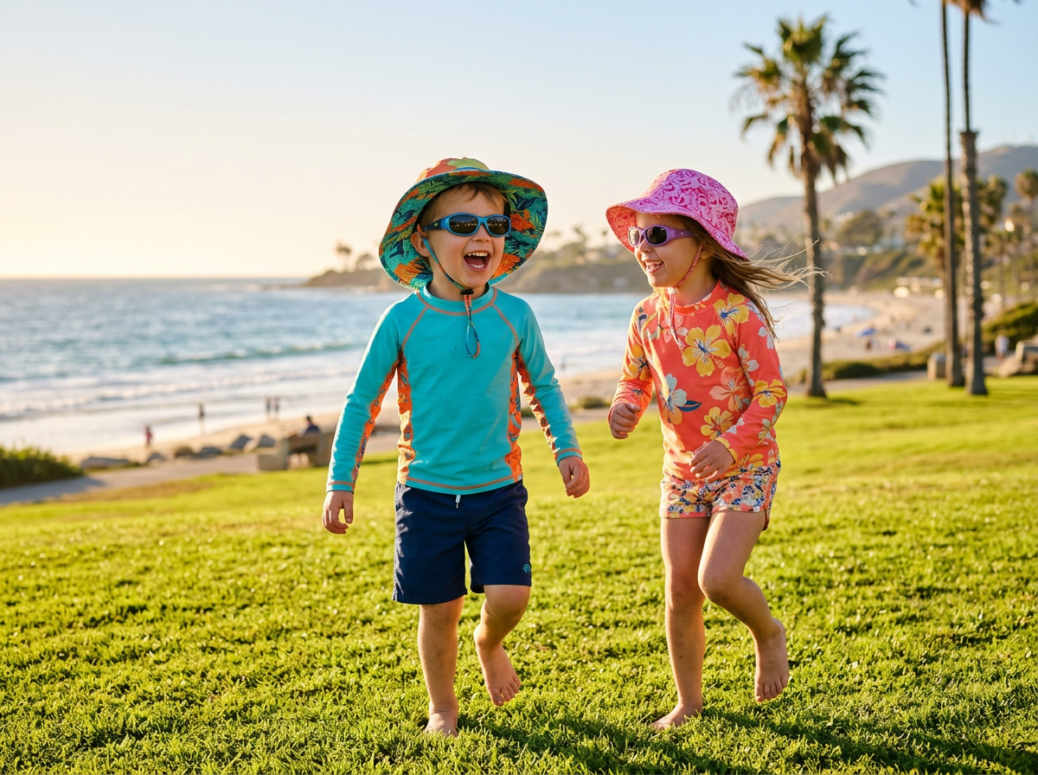
Every Aussie parent gets the sun safety chat. Slip, slop, slap – we’ve been hearing it since primary school. But when you’ve got a tiny human in the pram, the rules get a bit fuzzier. Do babies need sunscreen? Do they need sunglasses? At what age does any of this actually kick in?
Here’s a practical run-through of what genuinely works when it comes to protecting little eyes and skin in the Australian sun. No fluff, no overselling, and a few things you can safely skip.
The Aussie UV reality (and why it hits babies harder)
Australia sits under one of the highest UV levels on the planet. Cancer Council Australia flags that from around September through March, the UV index in most parts of the country regularly sits at 3 or higher – and that’s the threshold at which sun protection becomes essential, even on cloudy days.
For babies, this matters more than for adults. Their eye lenses are clearer, which means more ultraviolet light passes through to the retina. The damage doesn’t show up straight away, but it accumulates through childhood. Habits you build in the first few years genuinely shape long-term eye health.
So yes, worth thinking about. Even before your bub is old enough to be running around at the beach.
When should babies actually start wearing sunglasses?
The short answer: around six months.
Before that, most babies are shaded most of the time. Pram canopy up, hat on, nap indoors. Their nose bridge also hasn’t fully developed yet, so frames tend to slide off or sit at the wrong angle for proper coverage.
From about six months, when they start being out and about more (park visits, beach walks, pram time in direct sun), sunglasses become part of the same daily routine as a hat and sunscreen. If you’ve got a newborn, don’t stress about sunnies just yet. Focus on shade.
The five things that actually matter for babies in the sun
Cancer Council’s Slip, Slop, Slap, Seek, Slide is genuinely the guide worth following. Adapted for babies:
- Slip on protective clothing (long sleeves, lightweight fabric)
- Slop on baby-safe sunscreen from 6 months (or check with your GP if younger)
- Slap on a wide-brim hat (the wider the better)
- Seek shade whenever possible – pram canopy, umbrellas, indoors during peak UV
- Slide on sunglasses from around 6 months
Sunglasses aren’t a replacement for any of the others. They’re the final piece.
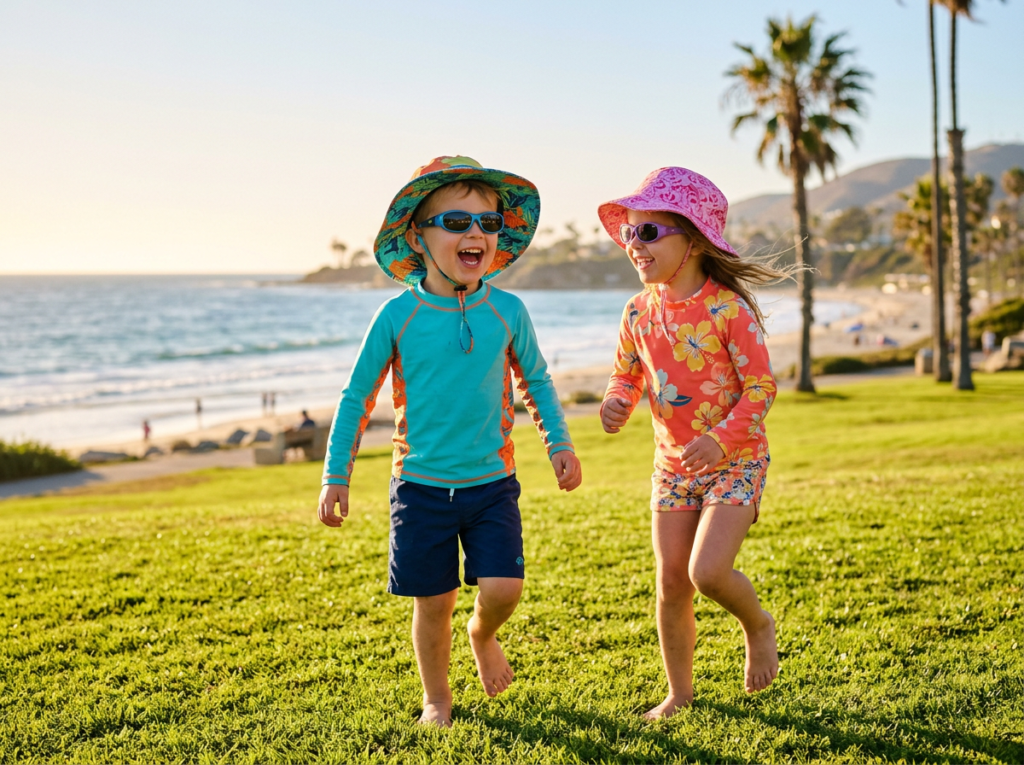
What to look for when buying baby sunglasses
This is where a lot of parents get tripped up. There’s a huge range of “baby sunglasses” on Aussie marketplace sites, and honestly, not all of them do the job. Here’s a short checklist worth using.
Polarised lenses. These cut glare off water, sand, road, and car bonnets. A baby who’s not squinting is a baby who’ll actually keep sunnies on. Look for Category 3 polarised if you can – that’s the density recommended for high-glare environments like the Australian coast.
Full UV protection. Look for lenses that block 100% of UVA and UVB rays (up to 400 nanometres). This is essential for developing eyes. Cheap “baby sunglasses” often print “UV protection” on the packaging without any independent testing behind them, so look for a brand that specifies how much UV is blocked.
Flexible frames. Babies twist, chew, and sit on their sunnies. Rigid plastic snaps. Flexible frames bend and spring back. This one detail is the difference between a pair that lasts three months and a pair that lasts three days.
Sized properly for babies. Adult frames scaled down don’t fit. Look for a brand that designs specifically for 0-2 year old head sizes.
A local one worth a look is baby sunglasses from this Melbourne kids brand, which ticks all four boxes and is designed specifically for the way Aussie kids live (beach days, prams, playgrounds). They come in a range of soft colours parents actually want to buy.
How to actually get sunnies on a wriggly baby
Here’s the truth: the first pair is a battle. The tenth pair is habit.
A few things that work:
Start at home, not at the beach. Five minutes on the couch or in the backyard, then build up. Praise heavily. Don’t make it a fight – if they pull them off, put them back on gently and move on with your day.
Consistency beats tricks. A baby who wears sunnies daily from six months usually doesn’t fight them as a toddler. A baby who only wears them at the beach every second weekend will resist every single time.
Wear yours. Babies copy parents faster than they follow instructions. If they see you putting sunnies on before leaving the house, they’ll want to do the same.
And don’t force nap time. Sunnies come off when they sleep. Sunnies go back on when they wake up.
The takeaway
Australian babies genuinely benefit from proper sun protection, and sunglasses are part of that from around six months. The four things that matter most: shade, hat, sunscreen, sunnies. When you’re picking a pair, look for polarised lenses, Australian standard certification, flexible frames, and proper baby sizing.
Everything else is nice-to-have. Get the basics right, build the habit early, and let the little adventures begin.
- About the Author
- Latest Posts
Lorraine is co-owner of Buggybuddys & Seniorocity and is a mother to two and furmum Cocker Spaniel Storm. Lorraine is also a qualified personal trainer and pilates teacher, once owning her own Yoga & Pilates studio in Perth. She previously lived and worked in London, UK where she worked as Public Relationships and Marketing Manager for several IT companies and worked with some of the largest tech companies in the world including Microsoft, Dell and EMC.