
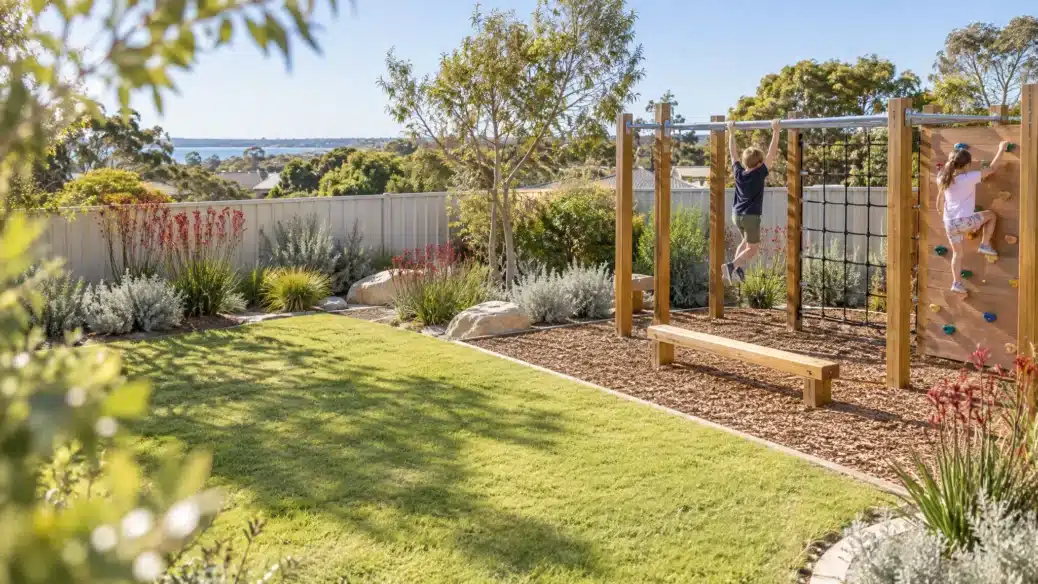
If you’ve got a kid who treats the couch like a climbing wall and the doorway like a set of monkey bars, you already know the local park only buys you so much peace. Setting up a climbing and monkey-bar zone at home gives all that energy somewhere to go, and it means the backyard earns its keep on the days you can’t face wrangling everyone into the car. Here’s how to plan one that suits an active Perth kid and holds up through a proper WA summer.
Why a home climbing zone earns its space
Between term-time afternoons and the long, sticky stretch of the summer holidays, kids need somewhere to burn off steam that isn’t a screen or the inside of your house. A climbing setup does that job in your own yard, which is worth a lot when you’re trying to cook dinner and keep an eye on them at the same time.
Older kids in particular want to hang off things and pull themselves properly off the ground. A flat trampoline or a toddler slide stopped delivering that years ago, so a climbing frame fills a real gap once they hit primary-school age. It also gives them a reason to invite the neighbours’ kids over, which is either a blessing or a full house, depending on the day.
Picking the right spot in your yard
Ground matters more than most parents expect. You want a level patch with something soft underneath, whether that’s rubber tiles or a decent depth of healthy lawn, and enough clearance all around so nobody clips an elbow on the fence or the Hills hoist mid-swing.
Sun is the other big one in Perth. A corner that bakes from midday in January will sit unused all summer, so aim for a spot that gets morning light and some afternoon shade, or plan to add a cover. Keeping the zone in view of the kitchen or living-room window saves you jogging outside every five minutes to check on the smaller ones.
Choosing a multi-level climbing frame for older kids
A backyard climbing frame gives your kids a reason to be outside between park trips, and the sturdier sets will take years of daily use without complaint. For older kids who have outgrown a toddler swing set, a multi-level climbing frame like the Vuly Quest 2.1 treehouse gives them somewhere to clamber and hide without leaving the backyard. Vuly is a Brisbane-based Australian play-equipment maker, and its frames are built from double-galvanised, powder-coated steel, which is exactly what you want holding up against relentless WA sun and the odd rusty rainy spell.
What multi-level actually buys you is variety. Platforms set at different heights, a rope net to scramble up, a cubby-style hideout and a run of monkey bars all sit in one frame, so a seven-year-old and a ten-year-old can use it at once without getting bored of a single feature. That range is what keeps a frame in daily use rather than abandoned by February, and it’s the difference between a purchase that lasts a couple of summers and one that carries your kids most of the way through primary school.
What to check before you buy a climbing frame
Whatever set you land on, a few things are worth checking before you hand over the cash, because the price tags on these can be steep and not every frame is built to the same standard.
Start with the steel and the certification. Look for a frame certified to the Australian and New Zealand safety standard (AS/NZS ISO 8124) rather than an unbadged import, and check how the metal is treated, since galvanised and powder-coated steel copes far better with our climate than a cheap painted finish that flakes and rusts.
Then match the frame to your kids. The bigger monkey-bar and multi-level sets are usually pitched at six and up, so a rating that suits a toddler won’t suit a ten-year-old and the other way around. Check the ground clearance and the soft-fall the maker recommends underneath, because a hard landing zone undoes a lot of the safety built into the frame itself.
Warranty is the last honest tell. A longer frame warranty means the maker expects the thing to last, so it’s worth reading the fine print rather than skimming it (Vuly’s frames, for instance, carry a seven-year one). Compare that figure across the sets you’re weighing up, and factor in whether replacement parts and add-ons are easy to get down the track.
Making it last through the holidays and beyond
Once it’s up, a bit of upkeep goes a long way. Give bolts a quick check at the start of each holidays and hose the salt and dust off if you’re near the coast. Rotating the accessories now and then gives the kids something new to climb on without you buying a whole new frame.
The real payoff shows up on the days the weather’s ordinary and the park’s a hassle. Instead of hearing that they’re bored, you get them off their devices and worn out enough to actually sleep. For an active kid stuck between park trips and a long Perth summer, a climbing zone in your own backyard might be the best-value entertainment you set up all year.
- About the Author
- Latest Posts