

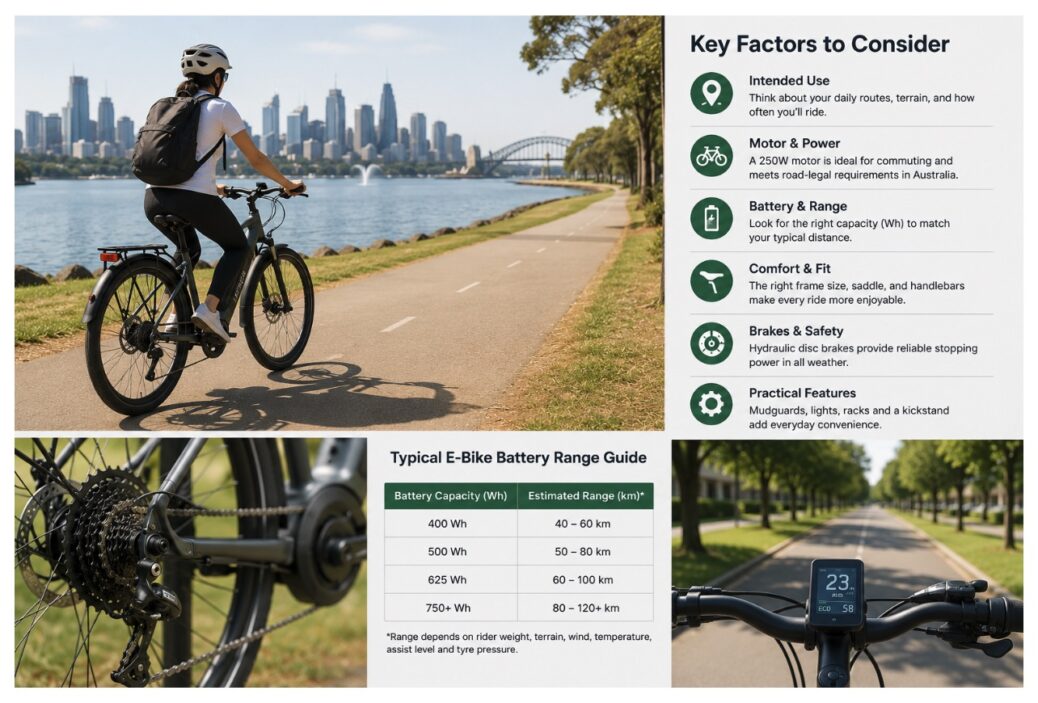
If you’d asked me a few years ago what made a good commuter bike, I probably would’ve talked about frame size and gears. Today, the conversation is different. More Australians are swapping short car trips for e-bikes, and after riding several commuter models, it’s clear that comfort, battery performance and build quality matter far more than chasing the biggest motor.
That’s exactly why electric hybrid bikes have become such a popular choice. They combine the efficiency of a road bike with the relaxed riding position of a commuter bike, making them ideal for everything from weekday commutes to weekend rides along the coast.
Start With How You’ll Actually Ride
One mistake people make is buying a bike for the occasional adventure instead of their daily routine.
Ask yourself:
- Will you mostly ride on bike paths?
- Do you have steep hills on your commute?
- Are you carrying groceries or a backpack?
- Do you ride year-round?
If your rides are mainly on sealed roads with the occasional gravel path, a hybrid e-bike is usually a better fit than a heavy electric mountain bike.
According to Wikipedia, hybrid bicycles are designed to combine the speed of road bikes with the comfort and practicality of mountain bikes, making them particularly well suited to mixed urban environments.
Don’t Be Distracted by Motor Wattage
Australian road regulations limit most road-legal e-bikes to a 250W motor, so comparing wattage alone rarely tells the full story.
What makes one bike feel smoother than another often comes down to:
- controller tuning
- overall bike weight
- battery efficiency
- tyre choice
- frame geometry
For example, several commuter-focused Leitner models use a 250W rear hub motor, but because they’re paired with lightweight aluminium frames and quality components, they deliver a much more natural riding experience than many budget alternatives.
Compare the Specifications That Actually Matter
Here’s what I’d look for before buying an everyday commuter.
| Component | Good Choice | Why It Matters |
| Frame | 6061 aluminium | Lightweight, corrosion resistant |
| Motor | 250W rear hub | Legal across Australia and ideal for commuting |
| Battery | Samsung lithium cells | Better reliability and longer service life |
| Brakes | Hydraulic disc brakes | More confidence in wet weather |
| Gears | Shimano drivetrain | Smooth shifting with readily available parts |
| Tyres | Puncture-resistant commuter tyres | Fewer roadside repairs |
| Range | 60–100+ km | Plenty for most daily riders |
For example, Leitner’s Riviera combines Samsung battery cells with hydraulic TEKTRO disc brakes and claims a riding range of up to 120 km under ideal conditions. While real-world range depends on terrain, rider weight and assist level, those specifications make it well suited to longer commutes and recreational rides.
Battery Size Isn’t Everything
One of the most common questions I hear is:
“How far will it go on one charge?”
The honest answer is—it depends.
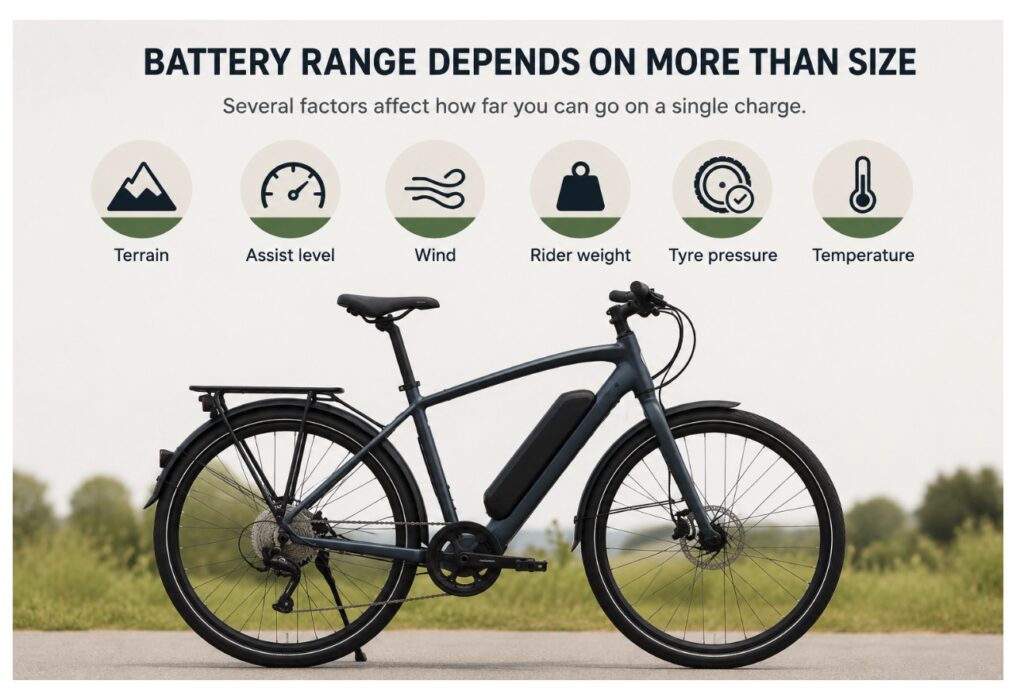
Range varies depending on:
- headwinds
- tyre pressure
- rider weight
- stop-start traffic
- climbing hills
- assist level
For everyday riding around Australian suburbs, a battery between 500Wh and 700Wh is generally the sweet spot.
If you’re regularly riding more than 40 km each day, stepping up to a larger battery can reduce charging frequency and improve convenience.
Pay Attention to the Contact Points
Specifications look great on paper, but comfort is what keeps you riding.
The biggest difference usually comes from three simple things:
- saddle comfort
- handlebar position
- tyre width
A bike with slightly wider tyres often feels noticeably more stable on shared paths, uneven asphalt and light gravel without sacrificing efficiency.
Some commuter models, including the Leitner Ultimate, also keep overall weight surprisingly low for an electric bike, making them much easier to manoeuvre into apartments, garages or bike racks.
Hydraulic Brakes Are Worth the Extra Cost
This is one feature I wouldn’t compromise on.
Hydraulic disc brakes require less hand effort, provide more consistent stopping power and perform significantly better during wet Australian winters.
Whether you’re commuting through Melbourne traffic or riding after summer rain in Brisbane, reliable braking adds confidence every time you ride.
Think Beyond the Bike
A few practical extras can make everyday riding much easier.
I’d always recommend looking for features such as:
- integrated front and rear lights
- rear cargo rack
- full-length mudguards
- kickstand
- removable battery
- USB charging display
- puncture-resistant tyres
They’re not the headline features you’ll see in advertisements, but they’re the ones you’ll appreciate after a few weeks of ownership.
Try Before You Buy
If possible, spend at least 15 minutes riding the bike before making a decision.
Instead of asking whether it’s fast, pay attention to questions like:
- Does the motor engage smoothly?
- Can you comfortably reach the handlebars?
- Is the riding position relaxed?
- Does the bike feel stable when turning slowly?
- Can you easily lift or manoeuvre it?
Small details become surprisingly important once you’re riding every day.
For most Australian commuters, a well-designed bike with a 250W motor, a quality Shimano drivetrain, hydraulic disc brakes and dependable Samsung battery cells will tick every box. Brands such as Leitner have built a strong reputation by focusing on exactly these fundamentals rather than unnecessary extras.
If you prioritise fit, ride quality and component reliability over marketing claims, you’re far more likely to end up with a bike you’ll still enjoy riding years from now.
References
- Wikipedia – Hybrid bicycle: https://en.wikipedia.org/wiki/Hybrid_bicycle
- Wikipedia – Electric bicycle: https://en.wikipedia.org/wiki/Electric_bicycle
- Australian Government – Department of Infrastructure, Transport, Regional Development, Communications and the Arts: https://www.infrastructure.gov.au/
- About the Author
- Latest Posts