

Freedom of movement is something most of us take for granted until something changes.
An injury. A health condition. The natural process of getting older. Even something as simple as a large property or a long stretch of terrain that used to be manageable but no longer is.
When that shift happens, the conversation about personal mobility becomes very real, very quickly.
And it matters. Not just for convenience, but for independence, mental wellbeing, social connection, and quality of life. The right mobility solution does not just get you from one place to another. It puts you back in control.
The good news is that the options available today are better than they have ever been. Whether you are looking for something recreational, something practical for everyday use, or something that supports a loved one with specific needs, there is a solution designed with exactly that purpose in mind.
This guide walks through some of those options honestly, covering what to consider before you buy, what the right questions are, and how to make a choice that genuinely fits the life you are living.
When Getting Around Becomes Part of the Enjoyment
There is a particular kind of frustration that comes with loving an activity but finding the physical demands increasingly hard to manage.
Golf is a perfect example of this.
For many people, the game itself is not the problem. The social connection, the fresh air, the mental focus required, those elements remain deeply enjoyable well into later life. What changes is the stamina required to cover the distance on foot, round after round.
This is where equipment has made a genuinely significant difference for thousands of players.
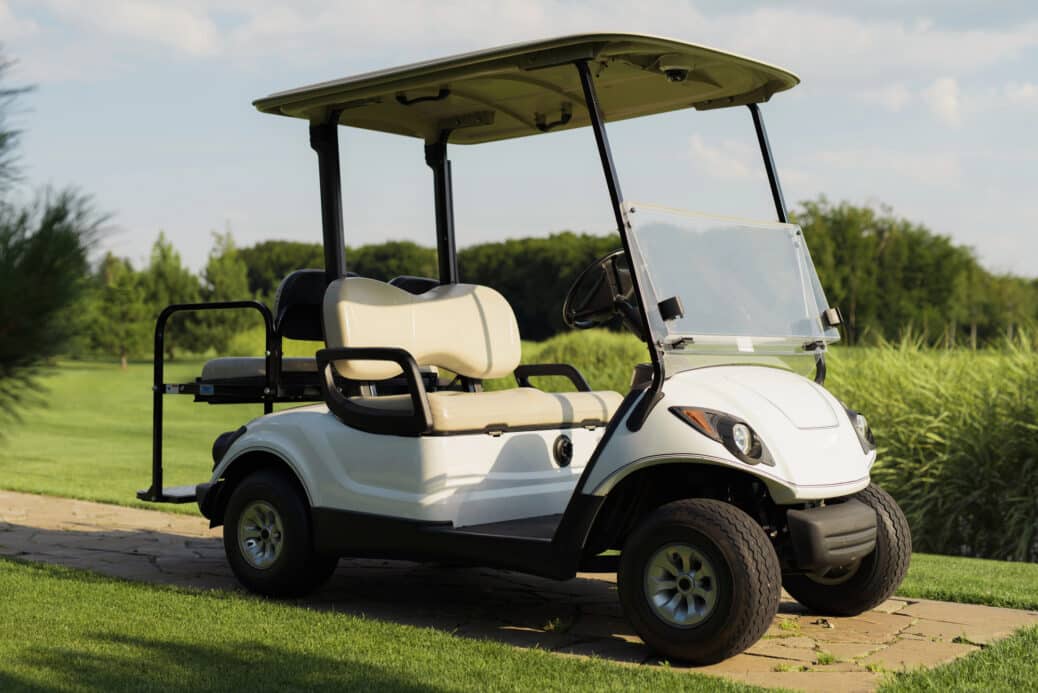
A quality motorised golf buggy does not diminish the game. If anything, it enhances it. Energy that would have been spent on the walk between holes is preserved for the actual play. Concentration stays sharper. Enjoyment lasts longer.
For players managing joint pain, cardiovascular conditions, or simply the natural fatigue that comes with age, a motorised buggy is not a concession. It is a smart decision.
But the consideration goes beyond individual health. Motorised buggies are increasingly popular with players of all ages and fitness levels who simply want to get more out of their time on the course. When the physical grind is removed, the game becomes more accessible, more social, and more fun.
When choosing a buggy, battery range, weight capacity, terrain handling, and ease of folding for transport are the key factors to assess. A buggy that suits a compact flat course may not perform as well on a course with significant elevation. Match the equipment to the environment you are actually playing in, not just the one you wish you were playing in.
It is also worth looking at what the buggy is built from. Durable, lightweight frames make a genuine difference over time, particularly if you are loading and unloading regularly. Check warranties carefully and buy from a supplier who can offer ongoing support, not just a transaction.
For a closer look at what recreational mobility options are available across different terrains and use cases, the resources available on this site offer practical guidance worth exploring before making a decision.
Everyday Mobility Deserves the Same Thoughtful Approach
Recreational mobility is one conversation. Everyday mobility is another, and often a more urgent one.
For people managing chronic conditions, recovering from surgery, or living with a disability that limits walking distance, the question of how to get through a normal day is not abstract. It is immediate and practical.
Public transport has limitations. Relying on others for every errand erodes independence in ways that compound over time. The emotional toll of feeling like a burden, even when the people around you do not see it that way, is real.
A well-chosen mobility aid changes that equation.
A mobility scooter is one of the most practical and empowering options available for people who need support across moderate distances. Whether it is navigating a shopping centre, visiting neighbours, or simply getting outside for some fresh air without pain or exhaustion, a scooter provides the independence that keeps life feeling full.
The range of options on the market today is broad. Compact travel scooters fold down and fit into a car boot with minimal effort. Mid-range models offer a balance of portability and battery capacity suited to regular daily use. Heavy-duty models are built for outdoor terrain and longer distances.
Choosing the right one starts with honest questions. How far do you typically need to travel in a single outing? Is the terrain mostly flat or does it include inclines? Will the scooter need to fit inside a vehicle? Does it need to be operated primarily by the user, or will a carer be involved in setting it up?
Weight capacity is a factor that often gets overlooked. Always check the rated capacity and choose a model that gives a reasonable margin above what you need. Pushing any piece of equipment to its rated limit consistently shortens its lifespan and can create safety concerns.
Battery performance in real-world conditions is another area where claims and reality sometimes diverge. Manufacturer range estimates are typically measured under ideal conditions. Hills, heavier loads, and older batteries all reduce effective range. Ask for real-world performance data where possible, and factor in how access to charging works in your daily environment.
Ongoing servicing and parts availability matter too. A scooter that is well-supported by its supplier will serve you far longer and more reliably than one purchased purely on price.
Independence is worth investing in properly.
The Infrastructure Around Mobility Matters Just as Much
Here is something that often gets overlooked in the personal mobility conversation.
The equipment is only part of the picture. The environment that equipment operates in matters enormously, particularly for people with sensory impairments, including those who are blind or have low vision.
A person who navigates their community with confidence does so partly because the built environment has been designed with their needs in mind. And in many cases, that design is more deliberate than most people realise.
One of the most important and widely used accessibility features in public spaces is ground surface indicators. Specifically, tactile indicators are the raised dot or bar patterns you see embedded in footpaths, near kerb ramps, at pedestrian crossings, and at the edges of train platforms.
They are not decorative. They are a navigation system.
For a person using a white cane or relying on foot sensitivity to understand their environment, tactile indicators communicate critical information. Dot patterns signal a hazard or decision point, such as a crossing or a step. Bar patterns indicate a safe direction of travel. Together, they create a language underfoot that enables independent navigation.
The design and placement of tactile indicators is governed by specific standards, and for good reason. An incorrectly placed indicator can be just as disorienting as no indicator at all. Gaps in coverage create uncertainty. Poor-quality materials that fade or become flush with the surface over time stop doing their job altogether.
For property developers, councils, builders, and facility managers, understanding tactile indicator requirements is not optional. It is a fundamental part of making any public or semi-public space genuinely accessible.
There is also a broader point worth making here. Accessibility infrastructure benefits a far wider group of people than it is often credited for. Parents with prams, people with temporary injuries, older adults with balance concerns, and travellers with heavy luggage all benefit from well-designed accessible environments.
Designing for accessibility is not a niche consideration. It is a good design, full stop.
When assessing a public space or a development project, look at the full accessibility picture. Ramps, surface materials, lighting, signage, and tactile indicators all work together. A weakness in any one of those elements creates a gap in the whole system.
Putting It All Together: Mobility as a Right, Not a Privilege
Whether the conversation is about a golf buggy that keeps a player on the course for more seasons, a mobility scooter that gives someone back their daily independence, or the tactile infrastructure that makes a neighbourhood navigable for everyone, the underlying theme is the same.
Movement matters.
The ability to go where you choose, when you choose, with confidence and without pain or anxiety, is not a luxury. It is fundamental to living well.
Too often, people delay making decisions about mobility aids or accessibility adaptations because they feel it represents a giving-in of some kind. That framing is worth challenging directly.
Choosing a solution that fits your life is not an admission of limitation. It is a commitment to staying active, staying connected, and staying in charge of your own days.
The technology available today makes that easier than it has ever been. Equipment is lighter, smarter, and more capable. Accessibility standards are more rigorous. The awareness of what genuine inclusion looks like in public spaces is growing.
The decisions that matter most are the ones made at the individual level. What do you actually need? What would make the most difference to your daily life? What would keep you doing the things you love for longer?
Start there. Then find the right solution to match.
- About the Author
- Latest Posts