

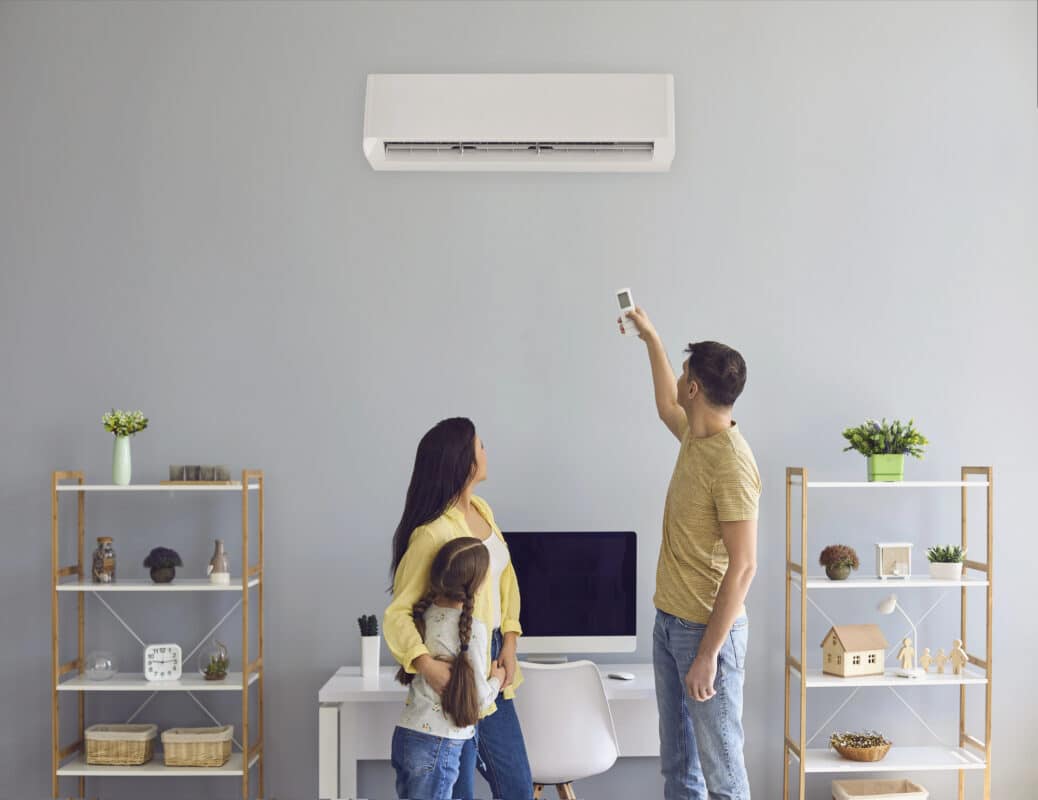
If you’ve ever walked into a room on a 35-degree Aussie summer’s day and felt like your air conditioner was doing absolutely nothing, chances are the unit was the wrong size for the space. It’s one of the most common mistakes people make when buying an air con—going by looks, price, or brand without thinking about whether the unit actually suits the room.
The truth is, size matters. Too small and it’ll huff and puff all day without ever cooling the place properly. Too big and it’ll switch off before it’s finished the job, leaving the air a bit cold and clammy. The sweet spot is somewhere in the middle, and finding it isn’t as tricky as it sounds.
Why sizing is so important
When we talk about “size”, we’re not looking at how bulky the unit looks on your wall. It’s all about capacity, measured in kilowatts (kW). Think of it as the power behind the cool air.
- An undersized unit runs constantly, driving up your energy bills and often still leaving you hot and sticky.
- An oversized unit short-cycles, blasting the room with cold air then shutting off too quickly. That wastes electricity and doesn’t pull enough humidity out of the air.
Both scenarios cost you more in the long run, either through higher bills or faster wear and tear.
Start with the basics: room size
The simplest way to get an idea of what you need is by measuring the room. Grab a tape measure, multiply the length by the width, and you’ll have the floor area in square metres. Most installers also assume a standard ceiling height of 2.4 metres. If your ceilings are higher, you’ve got more air to cool, so you’ll need extra grunt.
Here’s a rough guide that many people use:
- Bedrooms or studies up to 20 m² → about 2–2.5 kW
- Medium rooms up to 40 m² → around 5 kW
- Large living areas 40–60 m² → about 5–6 kW
- Open-plan spaces over 60 m² → 7 kW or more
This isn’t the final word, though. A 30 m² lounge room with big north-facing windows is going to feel very different from one shaded by a verandah.
How the room is used
Not every space is used the same way. A bedroom that only needs cooling at night won’t need as much power as a kitchen that’s constantly battling the oven and cooktop. A home office with two people working all day might also need a bigger system than you’d first expect.
The number of people in a room matters because every body adds extra warmth. So a family of five watching TV in the living room is a bigger cooling challenge than one person reading quietly in the same space.
Picking the right type of unit
Once you know the capacity you need, it’s worth thinking about the type of system:
- Split systems are the most common choice and perfect for individual rooms or open-plan areas.
- Multi-split systems let you run several indoor units off a single outdoor compressor—handy if you want to cool a few rooms.
- Ducted systems are best for whole-house comfort but need a bigger budget and professional installation.
Professionals from Aircon Service Near Me recommend seeking a tailored air conditioning assessment from a professional. This way, you’ll be guided through the selection process and feel confident that you’re choosing the best solution for your home.
Sun, shade, and orientation
Australia’s climate is harsh, and the direction your room faces makes a difference.
- Rooms facing west or north get hammered by the afternoon sun. These usually need a stronger system.
- South-facing spaces stay cooler and might cope with a smaller unit.
- If you’ve got large glass doors or single-glazed windows, expect extra heat creeping in.
Even small details like having a pergola, curtains, or external shutters can change how hard your air con has to work.
Don’t forget insulation
It’s not just the sun that counts. The way your home is built plays a big role too. A well-insulated ceiling and walls will trap the cool air in summer and keep the warmth inside in winter.
Older homes without much insulation can leak air like a sieve, meaning your air con has to work twice as hard. Brick homes tend to hold onto heat, while lightweight cladding can let it pass through more easily. If your place is draughty, factor that in when picking a system.
Energy efficiency counts
Size isn’t everything. The star rating on the Energy Rating Label (ranging from 1 to 6 stars) shows how efficiently the unit runs. In Australia, electricity isn’t cheap and summers are long, so it pays to choose a system with more stars, even if it costs a bit more upfront. Over time, the added efficiency can make a noticeable difference to your power bills.
When to call in the pros
Guides and charts are helpful, but they don’t replace experience. A licensed installer will take into account your home’s insulation, ceiling height, number of windows, and even where you live—because cooling a house in Darwin isn’t the same as cooling one in Hobart.
They’ll also make sure your unit is installed in the best spot so air flows evenly through the room. Getting that part wrong can make even the right-sized air con feel underwhelming. If you’re not ready to commit to buying, renting a portable air con can be a practical solution. It’s especially useful for renters, short-term stays, or testing out different capacities before making a permanent choice
Comfort That Lasts
Choosing the right size air conditioner is about more than just comfort. Get it right, and you’ll save on electricity, avoid premature breakdowns, and enjoy a steady, pleasant temperature year-round. Get it wrong, and you’ll either sweat through summer or waste money cooling air you don’t need.
So measure your space, think about sunlight and insulation, and then have a professional double-check your choice. A little effort now means years of reliable comfort when the next heatwave rolls in.
- About the Author
- Latest Posts