

Raising children comes with plenty of lessons, but teaching them to care about the environment can sometimes feel more challenging than expected. With so much emphasis on climate change, pollution, and the planet’s future, parents may wonder how to explain these issues in a way children can understand without overwhelming them.
It’s one thing to talk about protecting the environment, but another to help children see how those ideas translate into the choices they make every day. The good news is that raising environmentally conscious kids doesn’t require complicated lessons or major lifestyle changes.
Many of the most valuable lessons start with ordinary family activities, from sorting household recycling and growing vegetables to learning where electricity comes from and spending time outdoors. By involving children in these experiences, parents can help them understand why looking after the environment matters and how even small actions can make a difference.
So, how can you make sustainability a natural part of family life and encourage children to develop habits they’ll carry into adulthood?
Making Sustainability Part of Everyday Family Life
Children learn a lot about the world by observing the people around them, and the habits they develop at home can shape how they think about the environment as they grow up. Even household decisions can become valuable learning opportunities.
For example, families embracing solar power in Perth can show children how the sun provides a renewable source of energy and how technology can help us use natural resources more responsibly. It’s a practical way to demonstrate that looking after the environment isn’t just something we talk about, but something we can actively work towards through the choices we make.
Solar can open up many questions that kids may want to know about as well. You can tell your kids how we are able to convert the sun into energy and why it’s better for the environment than using other fuels. They can learn how creating electricity at home benefits the environment, and they can even see how many watts their system produces on a sunny day. They can also learn what happens when their system doesn’t get as much sun as usual. By allowing your child to learn these things, they can start to understand renewable energy.
There are many ways to teach your kids about sustainability and help them understand that it’s not only something you learn about in school or through global warming. When children see their families do things to help save our planet, they can begin to learn that there are things they can do at home to help. Letting your child ask questions and learn what your family is doing can help them love our environment.
Teaching Kids to Reduce, Reuse and Recycle
Children should be aware of waste from a young age. Instead of just teaching them to put rubbish in the bin, you can teach them what happens to our waste, how we can recycle some things, and what we shouldn’t use as much of. It’s also a good opportunity to show children that there are plenty of practical ways to start being environmentally friendly in your home, with simple changes that the whole family can get involved in.
One way to help reduce your waste is to recycle. You can teach your children to recycle paper, cardboard, glass and plastics that can be recycled. And why we shouldn’t put certain things in our recycling bins. You can have your children help you recycle around the house and teach them the recycling symbols. Once they’re older, get them involved in picking out purchases and figuring out what packaging can go in the recycling.
Another way to reduce your waste is to reuse items around the house. If you have containers, you can use them to store things in. You can repair your children’s toys or any other items around the house instead of buying new ones. You can use items such as cardboard boxes to create things for your children to play with. These are just a few ideas to help reduce your waste and allow your children to get creative.
Helping Children Connect With Nature
When children are given the chance to spend time in nature, they will quickly learn why we need to look after our environment. Whether it’s noticing insects crawling on flowers or seeing birds nest in trees around you, children can learn so much when they are outside. Walking in the park or bush with your family over the weekend, or going to the beach, can help your children appreciate the environment around them.
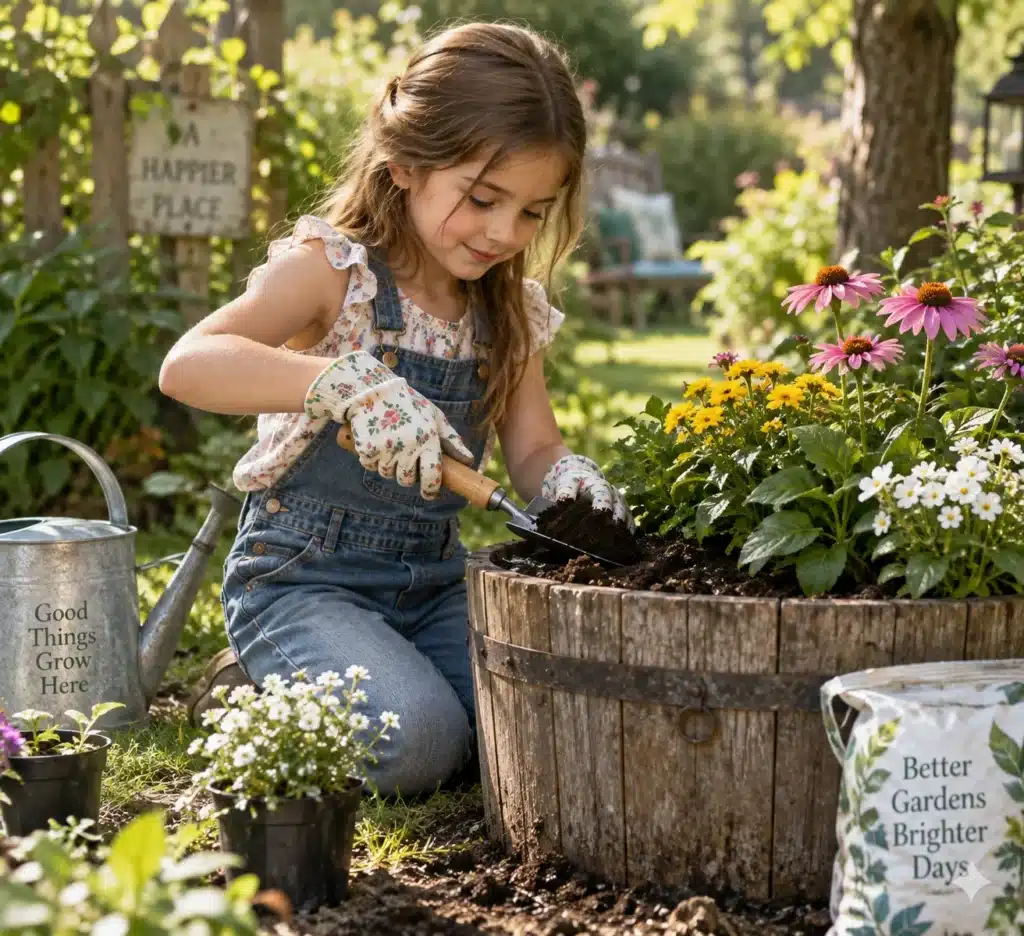
Planting a garden can also be beneficial. Your children can help you by planting veggie gardens, watering plants and learning about different flowers and how they grow. You can even start off by planting a few pots on your balcony and show your children about the sun and how insects can help our plants grow. If you have the opportunity, you can plant native trees and shrubs around your yard which will also provide food for local animals.
Once your children have learnt to appreciate our natural environment, you can teach them how to look after it. Whether it be picking up trash when walking around the park or not trampling on the vegetation around you. You can also show your children how to be aware of wildlife around our waterways and get involved in tree-planting days in your local area. We want to show our children that our environment is something we should all take care of.
Making Sustainable Choices When Shopping and Eating
Helping children learn about where food comes from can allow them to learn about their families’ decisions when it comes to purchasing products. A good way to begin this is at the grocery store. You can tell your children about buying in-season, local products and what goes into transporting them from the farm to the grocery store. Letting your children help you pick out ingredients, plan meals, and cook can help them learn how much it takes to feed a family and not waste what we have.
Parents can also use shopping trips to ensure their family is shopping sustainably by making more considered purchasing decisions. By picking products that have less packaging, using their own bags and buying products that you can use multiple times. Children can learn how to pick products that are recyclable or help you find fresh products for your weekly meals. All of these can teach your children that there is more to shopping than just what you want to buy.
Teaching your children the difference between what they want and what they need is also beneficial. Buying toys that will last longer, fixing what you can and giving away what you don’t need can all teach your children to make things last. When children start to help with these decisions, they can learn another way to help our environment by being conscious of what we buy.
Turning Environmental Awareness Into Lasting Habits
If you want your children to be more environmentally conscious in their day-to-day lives, you should allow them to have some sort of task that will allow them to apply what they have learned. This could be something as simple as having your young children water plants or remember to turn off the lights when they leave a room.
You can also allow older children to collect recycling, be mindful of how much water is being used or tend to a garden. By having them do these tasks, you are allowing them to feel involved and see a purpose for what they are doing.
There are many ways to make sustainability fun for children as well. This can be through family competitions or by allowing them to spend time outside and create with what they have found. There are endless ways to make playing sustainable, such as creating a cardboard box city or creating a nature course in your backyard and collecting items to go through the course. You can even make it a game and find as many bugs and plants as you can in your yard.
When teaching your children about environmental issues, it’s best to keep them informed but not scared. They may wonder what these issues will do to our world and how it will affect them when they grow up. As parents, we can give them the truth and let them know that there are many things being done to better our environment and that everyone can help make a change.
There is no need to make your child feel as if they have to save the world on their own. Just teach them about how their actions can affect the environment and what they can do to help make the world a better place.
Raising a Generation That Cares About the Planet
Teaching children to be eco-friendly does not mean they will always know the right decisions to make or understand all the issues we face on our planet. All we can do is provide them with information and experiences that help them care about their environment. By providing them with these tools, we as parents can teach our children to live more sustainably at home.
Letting your children make decisions about how your household lives can encourage them to ask questions and become more environmentally aware. Once your children are older, they will be able to make their own decisions on what they purchase and how they take care of their environment. There are many ways to teach your children to love the environment without making them feel like they are being told what to do.
If you make the experience enjoyable for them, they’ll take real pleasure in learning and feel motivated to look after our planet.
- About the Author
- Latest Posts

Lorraine is co-owner of Buggybuddys & Seniorocity and is a mother to two and furmum Cocker Spaniel Storm. Lorraine is also a qualified personal trainer and pilates teacher, once owning her own Yoga & Pilates studio in Perth. She previously lived and worked in London, UK where she worked as Public Relationships and Marketing Manager for several IT companies and worked with some of the largest tech companies in the world including Microsoft, Dell and EMC.