
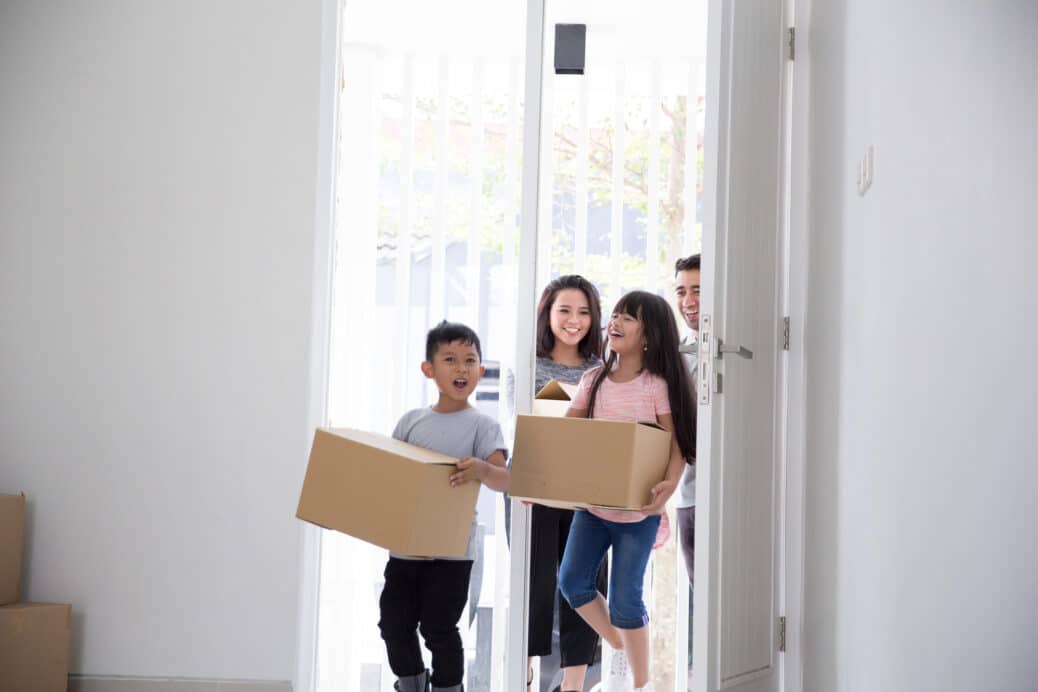
There’s an old joke among parents that moving house with children is like trying to pack a bag whilst someone is actively unpacking it. Anyone who’s done it will recognise the feeling.
Most advice on how to move house with kids covers the obvious stuff, including involving the kids, keeping routines, and staying calm. The more practical details tend to get left out. This guide covers what really matters when moving with children: how to manage behaviour changes during the transition, what to look for when choosing removalists, how to handle the school or childcare switch, what to do with kids on moving day itself, and how to help the family settle in once you’re through the other side.
The Chaos Is Manageable
Kids don’t handle uncertainty the way adults do. They don’t understand how to file “temporary disruption” away and carry on. When familiar things disappear into boxes, when their bedroom suddenly looks wrong, when routines collapse — that’s when behaviour changes. Sleep gets worse. Eating gets difficult. The toddler who hasn’t had a tantrum in months suddenly has four in one afternoon.
It’s not you failing as a parent. It’s just stress taking a physical form in a small person.
An important first step is to tell the kids what’s happening before it happens. Children cope better with change when they’re not surprised by it. Walk them through what moving day will look like, where they’ll sleep that night, and when things will start feeling normal again. Specific information works better.
One practical thing that helps is keeping a bag unpacked until the very last moment. Their favourite toys, books, and bedding. A small collection of recognisable, normal things that makes the first night somewhere new feel less strange. It’s something small that tends to make a real difference to how comforted your child feels during the whole process.
Choosing the Right Removalists Actually Matters for Families
One of the biggest mistakes families make is treating removalists as interchangeable. You get some people, a truck, move the stuff, and you’re done. But, when children are involved, it gets more complicated than that.
An inexperienced crew can turn a manageable day into a long one. A truck that’s too small means a second trip. Inadequate packing means damaged furniture. Poor organisation means hours spent locating essentials that should have been loaded last. The faster and more efficiently the move gets done, the sooner everyone can start settling in. This matters a lot when overtired children are waiting for their beds to be reassembled.
If you’re a family based in Brisbane, it’s important to research experienced Brisbane removalists who handle residential moves regularly. They’ll know how to load efficiently, protect furniture, and keep the job moving. Choosing the right movers will be the difference between getting the kids’ bedroom sorted before dinner and putting them to sleep on a mattress on the floor surrounded by boxes.
The School and Childcare Transition
If the move takes the family to a new suburb or city, the school situation is one of the more stressful things to sort. Every state in Australia uses some form of catchment or local intake area, and your address determines which public school your child is entitled to attend. It’s worth checking catchment zones and the schools within them before signing a lease, not after.
Once the school is confirmed, a quick visit to the school before the first day goes a long way. A tour or a brief meeting with the class teacher gives children something concrete to hold onto. They might even look forward to it. Knowing exactly where the classroom is will feel very different from being told the new school will be great.
For younger children, the Australian Children’s Education & Care Quality Authority has a provider search tool that shows quality ratings for childcare centres and preschools across the country. It’s a useful starting point for comparing options before committing to an area.
What to Do With Kids on Moving Day
The straightforward answer: get them out of the house.
Try to get help from a grandparent, a friend, a holiday programme, or anything that means the children are somewhere else while the removalists work. Trying to supervise young children and coordinate a move at the same time is exhausting, and things get missed.
If that’s not possible, set up a designated space for the kids early in the day. Find one room that is cleared of boxes, with snacks and something to occupy them. It’s not ideal, but it’s workable.
After the Move: Give It Time
The first couple weeks are the hardest. Everything is unfamiliar, the new house doesn’t smell right, the neighbours are strangers. Even the light through the windows is different.
Carve time out of the day to explore the area on foot as a family. See if you can find the nearest park and scope out the local shops. Maybe even go to the local library and get a new library card. Most Australian public libraries run free children’s programmes and they’re a decent way to start meeting other families nearby.
Every family moves differently, and every child adjusts differently. Some children settle within days. Others take months. Neither is unusual.
Moving is disruptive by nature. The goal isn’t to eliminate that disruption. It’s to give children enough stability within the chaos — keeping a bag of familiar things close, choosing removalists who won’t drag the day out, visiting schools, and making time to explore the new neighbourhood together.
- About the Author
- Latest Posts